


Shocking a Swimming Pool
Your guide to a safer, more sanitary, and sparkling pool.
What is Pool Shock & What Does it Do?
“Pool shock” refers to various chemical products that are designed to raise the levels of “free” chlorine in your swimming pool, meaning the chlorine that is available to kill algae, bacteria, and other contaminants.
By increasing your swimming pool’s free chlorine, pool shock helps sanitize the water, making it safer (and far more pleasant) to swim.
For best results, discuss your needs with a pool expert before making a decision about the type of shock to buy.
Types of Chlorine Measurements
Free Chlorine (FC)
“Free chlorine” measures the amount of chlorine that is available to sanitize the water. Critically, not all chlorine is “free,” as you’ll see in a moment. The ideal FC reading is 1 to 3 parts per million (ppm).
Combined Chlorine (CC)
Also called “chloramine,” combined chlorine (CC) is chlorine that has already been used. CC has much weaker sanitizing abilities than FC and should ideally be limited to 0.2 ppm or less.
Total Chlorine (TC)
Adding free chlorine (FC) plus combined chlorine (CC) gives you your total chlorine (TC) measurement.
How to Shock a Pool
Shocking your pool can be broken down into a few easy steps. If you’re ever unsure about how to proceed, we always recommend contacting an independent Latham pool professional who can help.
Step One: Check Your Pool’s Chlorine Levels
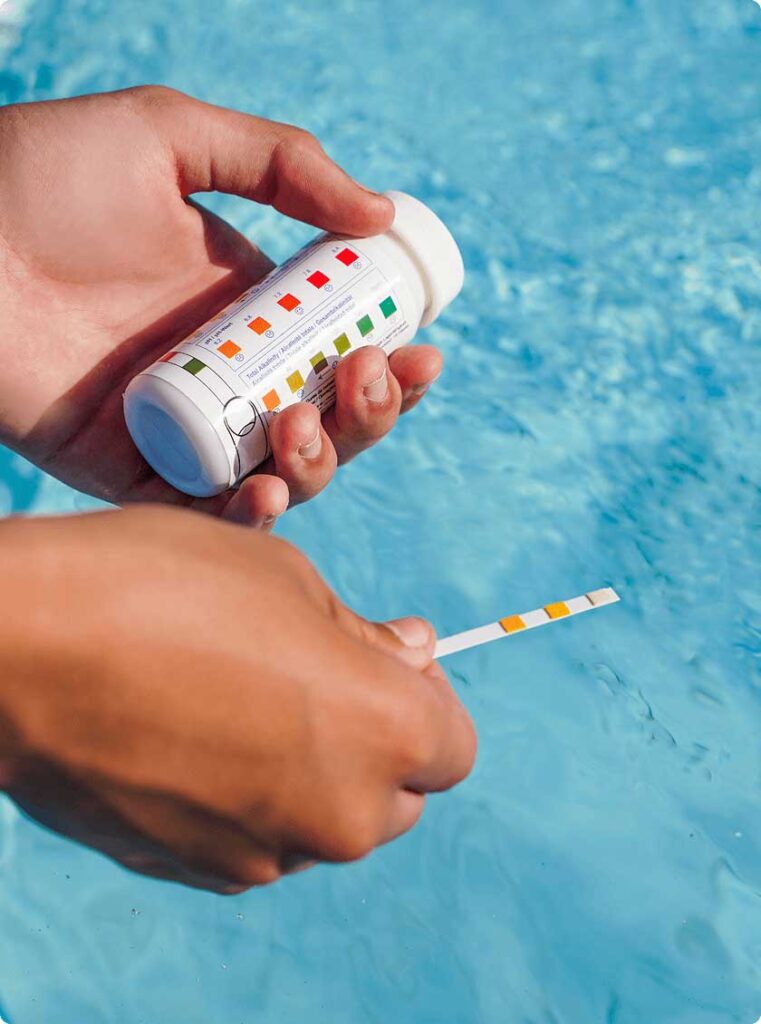
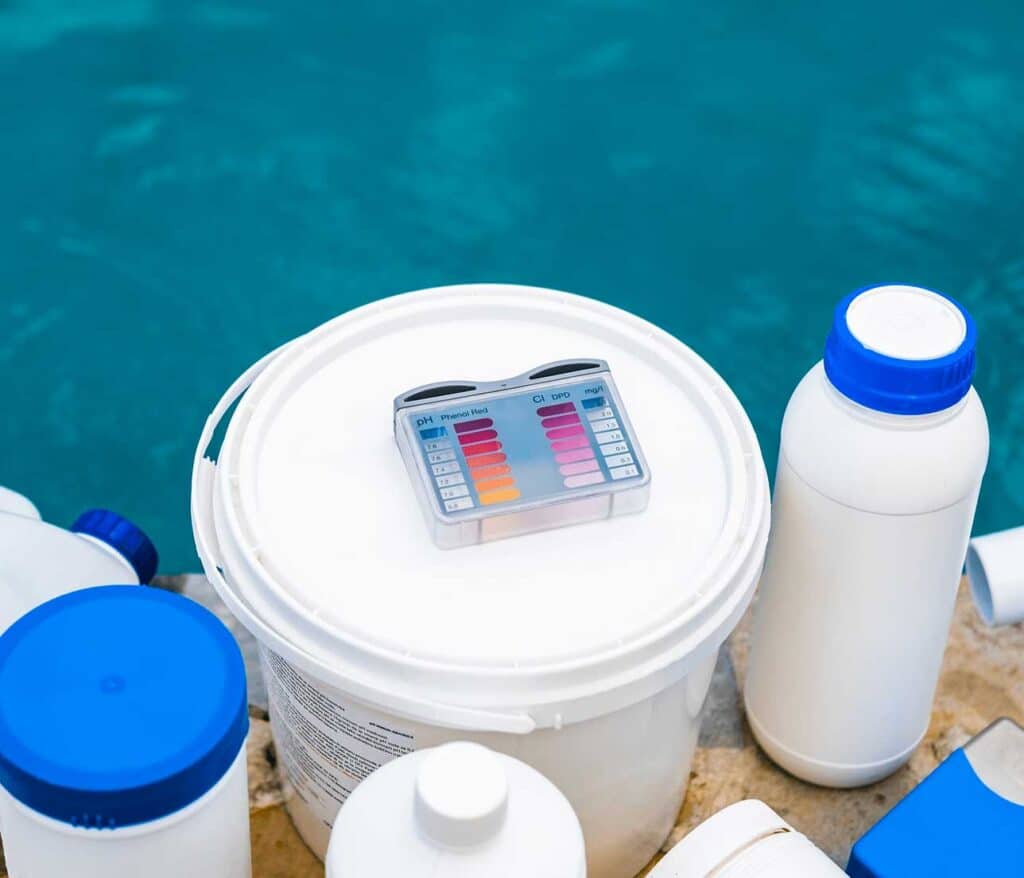
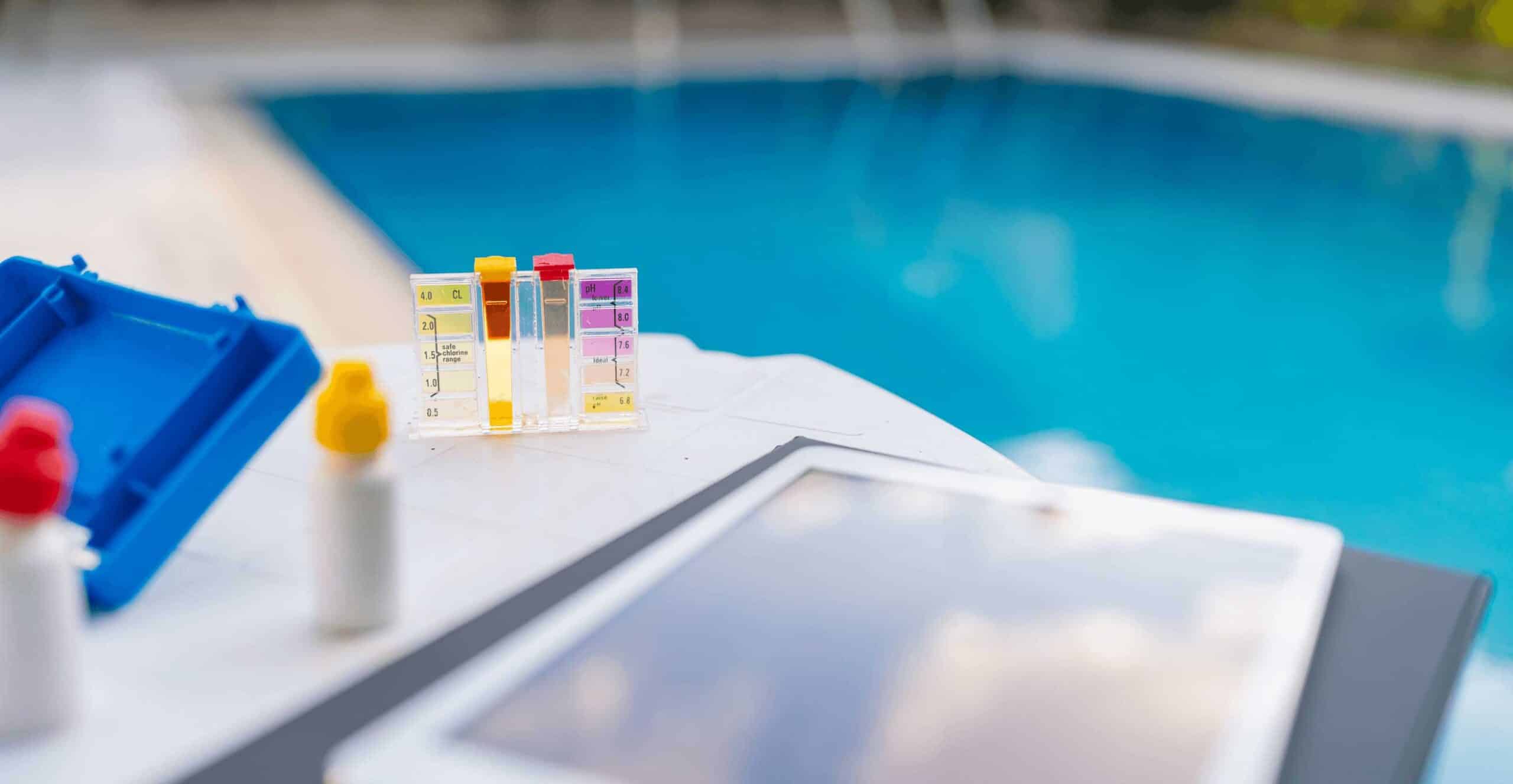
Make sure to follow the instructions provided with your kit or test strips. If your CC reading is 0.5 ppm or higher, it’s time to shock your pool. It’s also a good idea to shock your swimming pool:
- After pool parties or heavy use
- After heavy rains, high-speed winds, thunderstorms, or other extreme weather
- Every 1 to 2 weeks
- If you notice visible algae or a strong chlorine smell
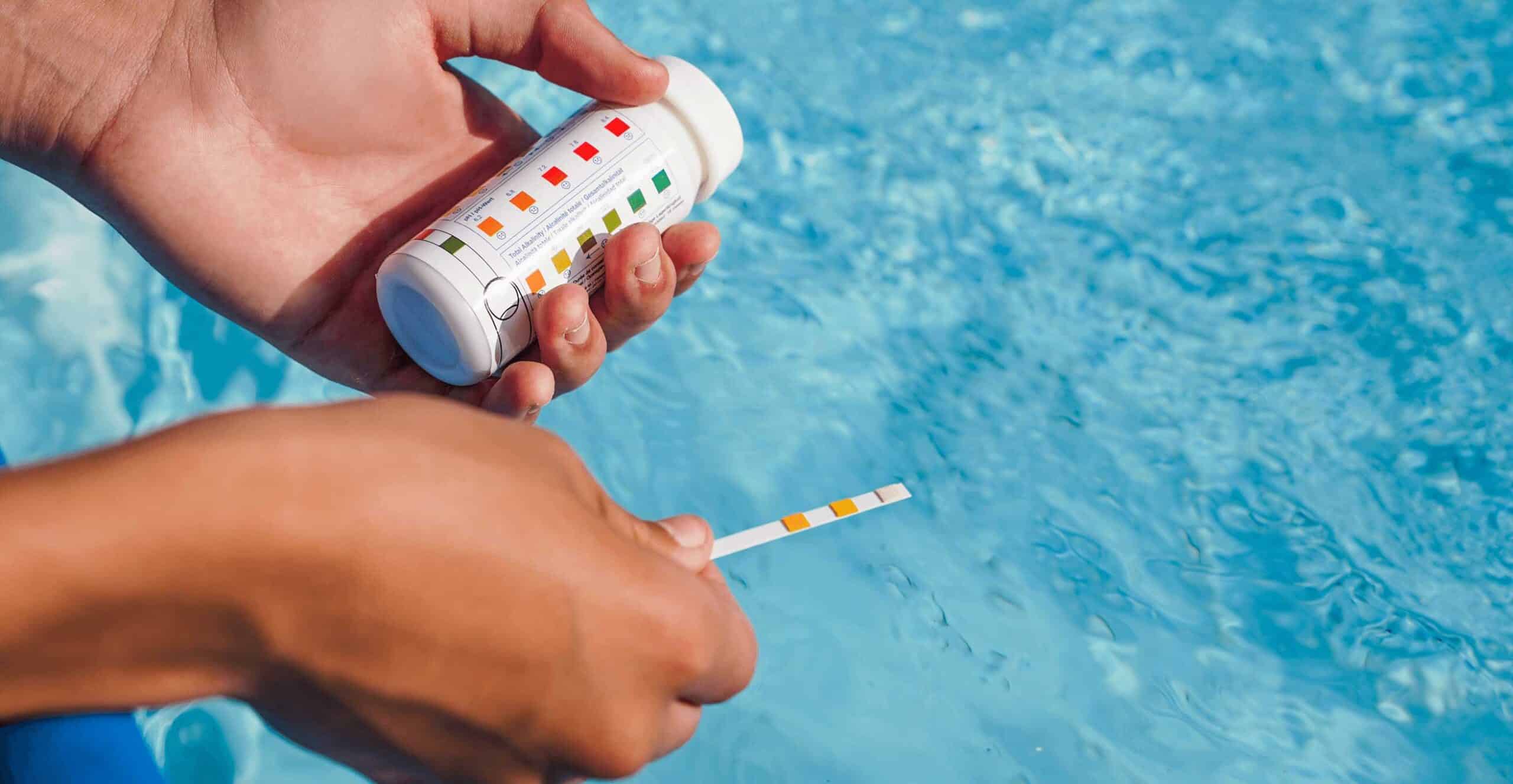
Step Two: Check Your Swimming Pool’s pH Levels
Shocking your pool will be most effective when your pool’s pH level is between 7.1 and 7.3 — just one of the many reasons why it’s important to know the right pH level for your pool.
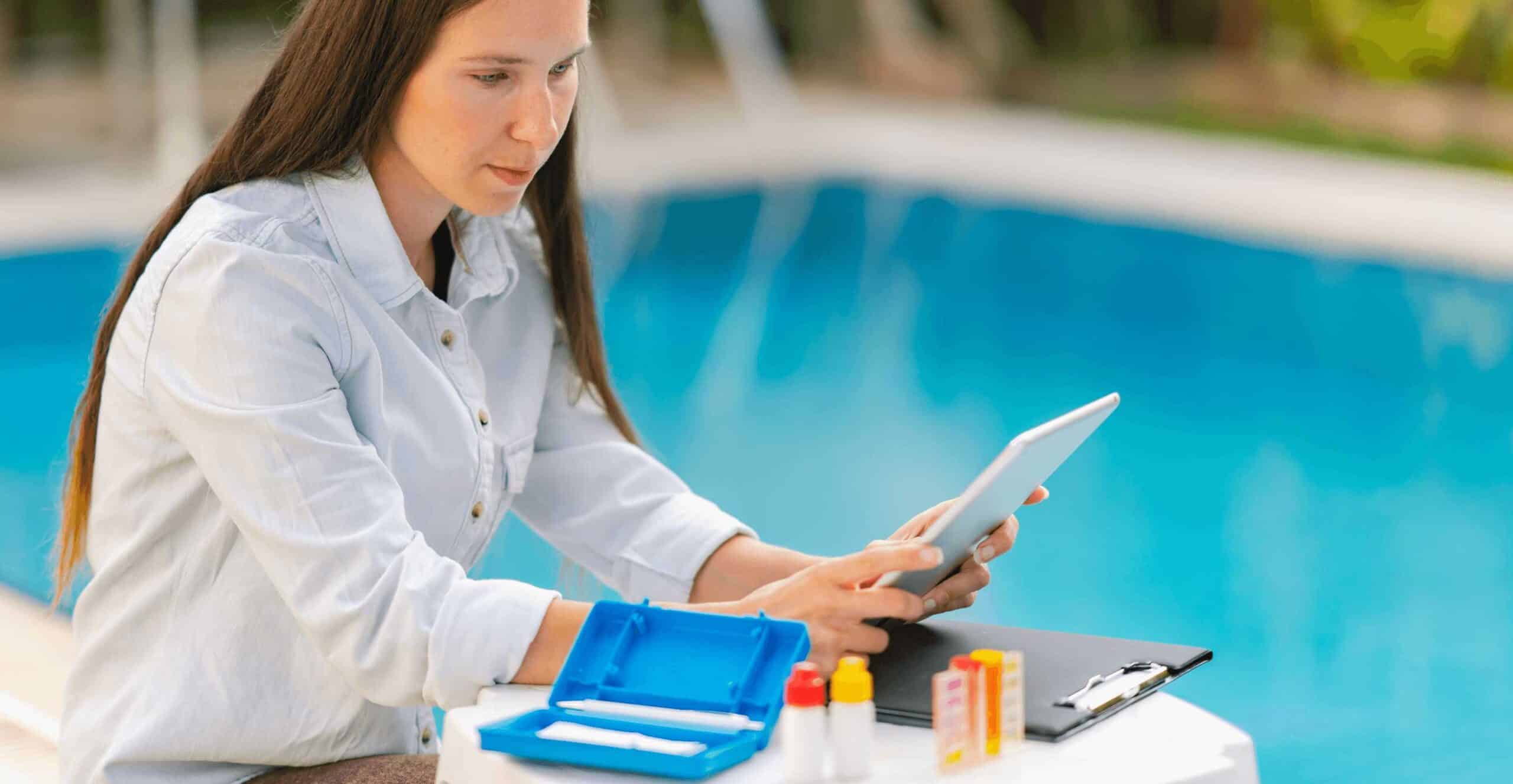
Step Three: Measure How Much Pool Shock You’ll Need
To find out how much shock your pool needs, carefully follow the product measurement instructions. For example, the instructions may recommend that you use one pound of shock per 10,000 gallons of water.
Note: Some situations, such as an extreme algae bloom, may require a double or even triple dose of pool shock. In these scenarios, consult an expert when calculating how much shock to use in your swimming pool.
Step Four: Mix the Correct Amount of Shock
It’s not a good idea to pour powdered pool shock directly into the water due to the staining that can result – especially in a vinyl liner pool. Avoid unsightly stains by pre-mixing powdered shock in a large, clean bucket. Make sure to wear gloves and eye protection. When pouring the shock mixture into your pool, aim for the edges of the water, and try to avoid splashing.
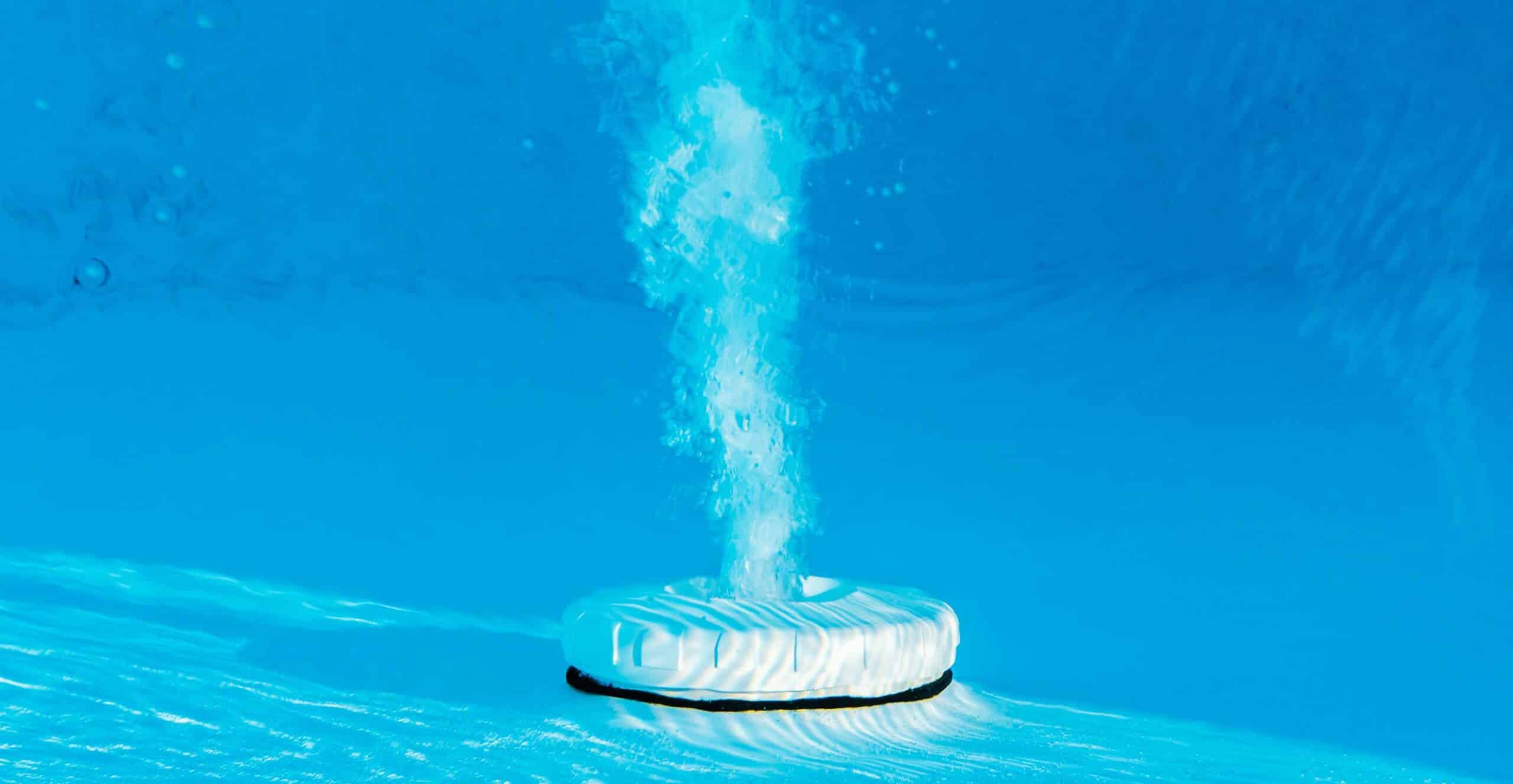
Step Five: Circulate Your Water
Turn on your pool pump. This will help the shock treatment circulate throughout your water, helping to clean and sanitize it. We recommend letting the pump run for at least six hours.
Step Six: Retest the Water
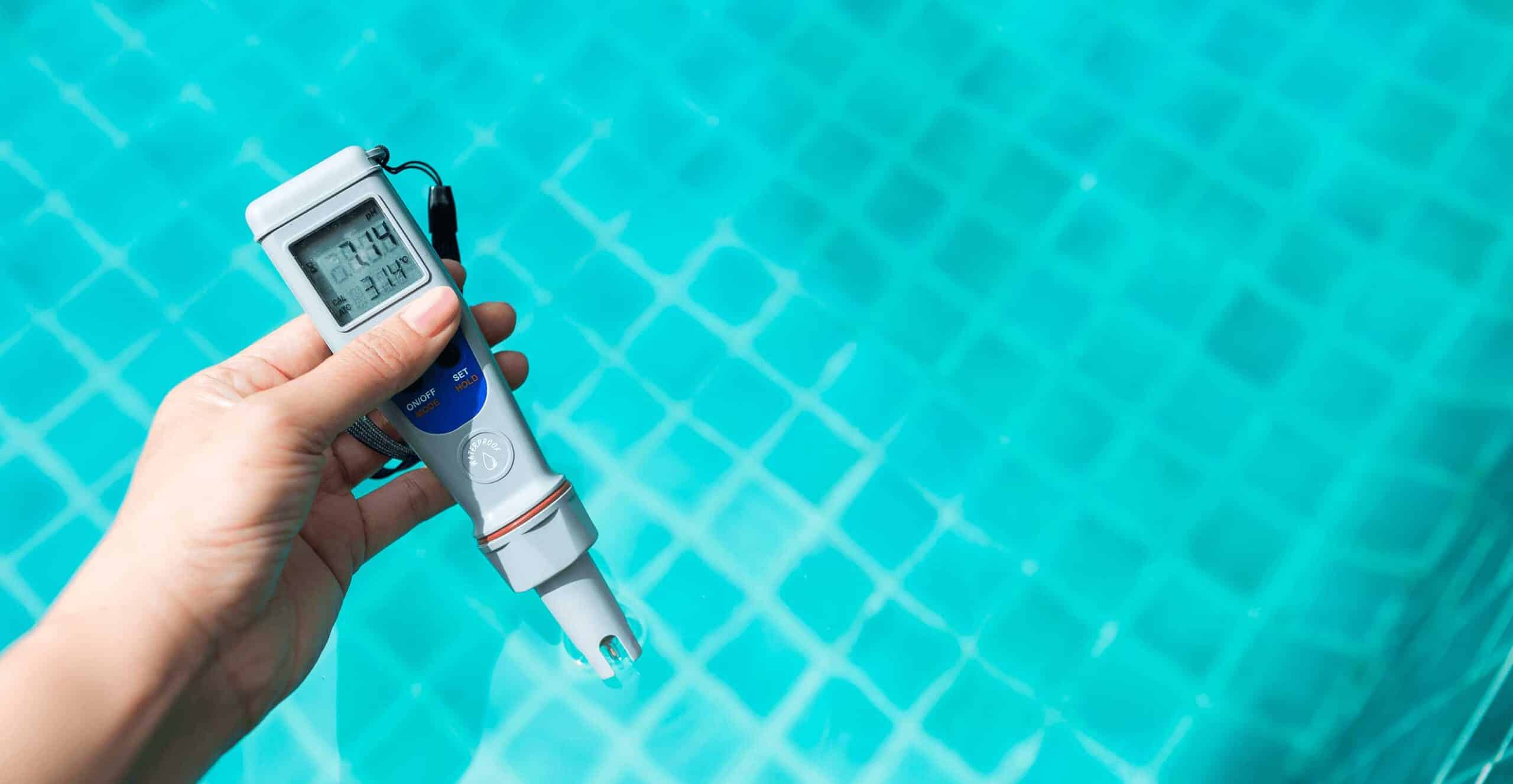
Retest your water again to determine the current chlorine level after shocking your pool. Refer back to the instructions on your water testing kit or strips. After shocking your pool, the FC or free chlorine level will likely read somewhere between 5 and 10 ppm.
Step Seven: Wait for Free Chlorine to Drop to a Safe Level
Once the free chlorine (FC) level has dropped down to a range of 1 to 3 ppm, it’s safe to go swimming again.
Pool Shock Checklist
Download our free maintenance checklist to get expert tips and step-by-step instructions for shocking your swimming pool.
How Often to Shock Your Pool
Generally speaking, you should shock your pool every one to two weeks. In addition, you may also wish to shock your pool after pool parties and outdoor gatherings, or following periods of severe weather.
You should also shock your swimming pool if the CC level reaches or exceeds 0.5 ppm, or if you notice cloudiness, discoloration, or strong odors.
Make sure to exercise special care when you open your pool for the season, or when you use your pool for the first time.
You may need to adjust the pool’s alkalinity, calcium hardness, pH, and/or CYA levels, which will affect the shocking process. It’s important to balance the water before shocking the pool.
Wait until evening. Shocking your pool at night gives chlorine and other chemicals time to work before they can be damaged or weakened by exposure to sunlight.
This is especially important if you are using an unstabilized shock treatment, such as cal hypo, which does not contain UV-blocking CYA.
Can You Over Shock a Pool?
Fortunately, it’s all but impossible to “over shock” your pool. However, you can accidentally use more shock than you need to, wasting money and supplies while creating extra work for yourself.
To prevent this, avoid using more shock than your pool requires. Remember, there are certain situations where a higher-than-normal dose might be necessary.
Pool Shock FAQs
There are many reasons to shock a pool – chief of which is to keep your water safe, sanitary, and free from bacteria. Occasionally shocking your pool can help rebalance your water if it’s cloudy, discolored, or smelly – indicators that there’s a much deeper problem with your pool water.
Skin cells, sweat, sunscreen, hair, leaves, insects, grime, and other organic materials contaminate your swimming pool. Not only can these substances make your pool cloudy by producing “combined chlorine,” they also provide sustenance that helps bacteria thrive.
Along with harmful bacteria, your pool can also become contaminated by:
- Algae Blooms: Algae blooms can be green, yellow, or even black — not exactly an inviting appearance. They may occur if chlorine levels dip too low, especially in combination with warm temperatures and poor water circulation.
- Chloramines (Combined Chlorine): Chloramines develop when chlorine molecules bind with contaminants like nitrogen and ammonia. Not only are chloramines the culprit behind “pool smell,” which many swimmers find unpleasant — more significantly, they make it harder for free chlorine to do its job effectively, resulting in poor sanitization. Chloramines can also cause skin or eye irritation, which is the last thing you want to experience when you’re looking for a relaxing swim.
When used properly, pool shock combats all of these problems, working to kill bacteria, reduce chloramines, and inhibit the growth of unsightly algae. Combined with regular maintenance, that means an odor-free, irritant-free, crystal-clear pool that’s safe for you and your family to enjoy.
There are numerous pool shock brands, product types, and concentration strengths to choose from. Most types of pool shock are chlorine-based, including products that feature cal hypo or di-chlor as their active ingredient.
Cal hypo is available at three concentration strengths (65%, 68%, or 73%) and can generally be purchased in quantities ranging from one to 50 pounds, depending on your needs. However, because it contains calcium, cal hypo may be unsuitable for pools that already have issues with calcium hardness. Cal hypo is also “unstabilized,” which means it does not contain cyanuric acid (CYA), a chemical that helps to shield free chlorine from ultraviolet (UV) rays emitted by the sun.
Because they lack protective CYA, unstabilized shock treatments like cal hypo are more vulnerable to sunlight, making them best suited for indoor pools or evening use. The benefit of unstabilized shock treatments is that they are fast-acting and economic, they cost just a few dollars per pound.
Di-chlor, an alternative to cal hypo, is a “stabilized” or CYA-containing product available at a concentration of 56%. Oxidizers like potassium monopersulfate, which do not contain any chlorine, can also be used to shock your pool but are less effective for tough or extreme jobs.
No. While pool shock usually contains chlorine, shock and chlorine are not the same thing and cannot be used interchangeably. By increasing free chlorine levels, shock treatments help quickly sanitize your pool, rapidly destroying bacteria, algae, chloramines, and other contaminants.
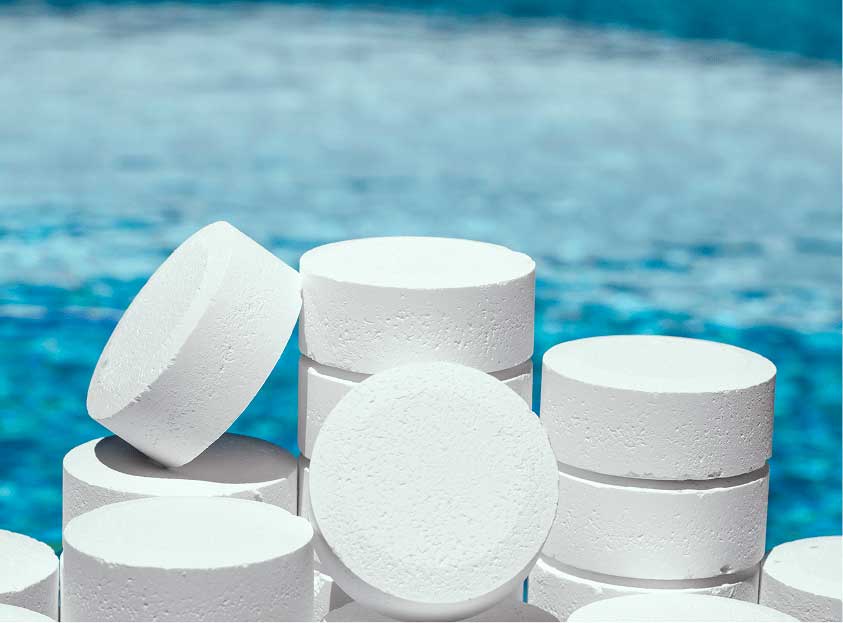
Other chlorine products, such as 3” chlorine tablets, contain lower concentrations of chlorine. Because they are weaker and less concentrated, chlorine tablets need to be used more frequently than pool shock. They also serve a different purpose, maintaining steady chlorine levels rather than destroying contaminants. However, both should be used for optimal results.
If you’re wondering, “When do you shock a pool?” the simple answer is to wait until evening. Shocking your pool at night gives chlorine and other chemicals time to work before they can be damaged or weakened by exposure to sunlight. This is especially important if you are using an unstabilized shock treatment, such as cal hypo, which does not contain UV-blocking CYA.
The general rule for calculating how much shock to your swimming pool is to use 2 pounds of shock per 10,000 gallons of water. Use this helpful chart to more easily determine how much shock you should use:
- Pool capacity 10,800 gallons (12′ x 24′): 2.16 pounds
- Pool capacity 19,200 gallons (16’ x 32’): 3.84 pounds
- Pool capacity 36,300 gallons (22’ x 44’): 7.26 pounds
If your pool is still cloudy after a shock treatment, the culprit may be algae, chloramines, or issues with unbalanced water, such as high pH levels or calcium hardness levels. If you shocked the pool using cal hypo, it’s also possible that the cloudiness is chemical residue.
You can fix the issue by simply running your pool filter and allowing the residue to gradually dissipate. If the water is cloudy for other reasons, such as a damaged filtration system, you should contact an expert for assistance.
If your pool looks green after being shocked, the problem may be unbalanced pH levels or faulty filtration systems. If neither of these are causing the issue, the culprit may be high levels of the stabilizer CYA, which can interfere with free chlorine’s ability to kill algae — a common cause of green water.
To lower the CYA levels in your swimming pool, you can dilute the water, or completely drain and refill the pool. Ideally, you should aim for a CYA level, or stabilizer level, of 35 to 60 ppm (for conventional swimming pools), or 60 to 80 ppm (for saltwater pools). For more tips on dealing with algae and green water, see our guide to swimming pool algae removal.
After being shocked, your pool will temporarily have high levels of free chlorine (FC). Swimming in highly chlorinated water can cause skin irritation and other harmful effects. The CDC recommends that pool owners “maintain free chlorine levels…between 1-3 parts per million” for safe swimming.
Depending on the treatment you used, it may take anywhere from an hour to 24 hours for your swimming pool’s FC levels to return to a safe range.
Fortunately, it’s all but impossible to “over shock” your pool. However, you can accidentally use more shock than you need to, wasting money and supplies while creating extra work for yourself. To prevent this, avoid using more shock than your pool requires. Instead, check our pool shock calculator above and make sure to follow all product directions carefully. Remember, there are certain situations where a higher-than-normal dose might be necessary. If you’re dealing with extreme contamination, consult a pool expert before you shock your pool.
We recommend running your pool pump for at least six hours after shocking. This allows the pool shock chemicals to disperse evenly throughout the water, while also giving the filters a chance to clear away dead algae and other contaminants.
If you activate your swimming pool’s automatic safety cover too soon after shocking, it could be stained or damaged by the pool shock chemicals. To learn more about this issue (and the steps you can take to avoid it), check out our article on how to keep pool chemicals from damaging your safety cover.
Yes, you can shock a saltwater swimming pool. In fact, not only is it possible to shock a saltwater pool — it’s a smart idea if you want to get the most out of your investment. For example, you will need to shock your saltwater pool if it becomes contaminated by algae. However, your saltwater pool’s adjustable chlorine generator should generally produce enough chlorine to control contaminants.
Learn More About Pool Maintenance