



Swimming Pool Care & Maintenance
Explore how-to guides and expert tips to clean and care for your inground pool.
Extend Your Pool’s Lifespan with Regular Maintenance
Proper water balance is the single most important factor to maximizing the life and appearance of any swimming pool.
Frequently checking your pool water levels will help ensure proper maintenance.
It’s a good idea to have a professional pool expert assess your water levels once per month.

How-to Guides and Expert Tips to Maintain Your Pool
Whether you have a vinyl liner pool or fiberglass swimming pool, we’ve compiled expert resources to help you care for it.

How-to Clean an Inground Pool
Helpful tips and recommendations to keep your pool clean.
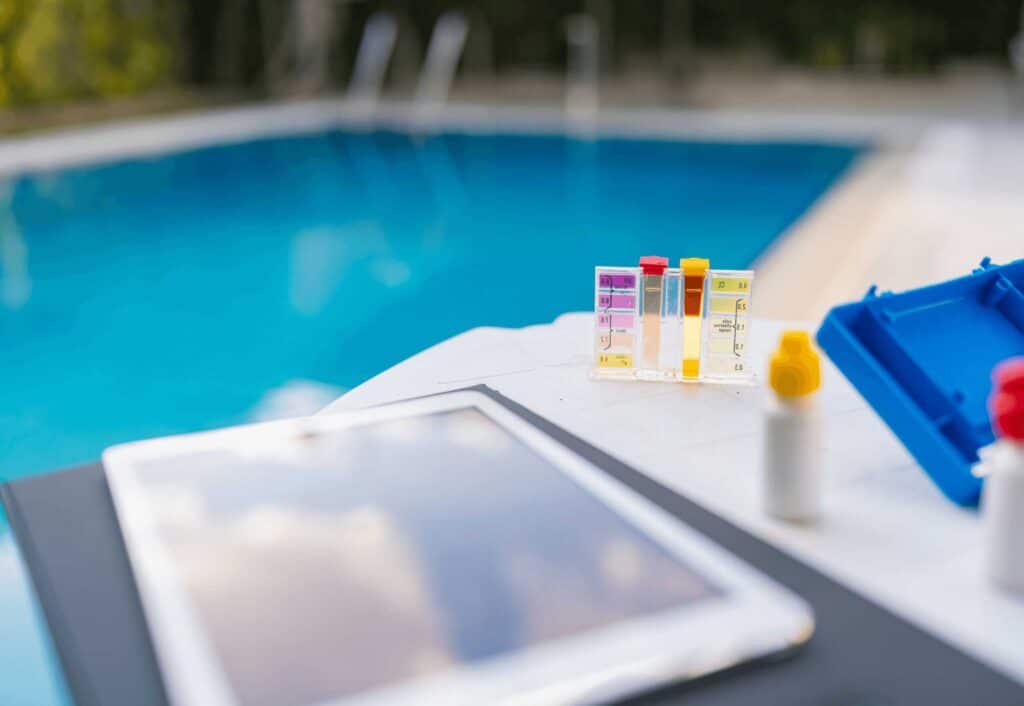
Testing Water Chemistry
Tips and methods for balancing your inground pool water.
How-to Shock Your Swimming Pool
Learn how to sanitize your inground chlorine or saltwater pool.
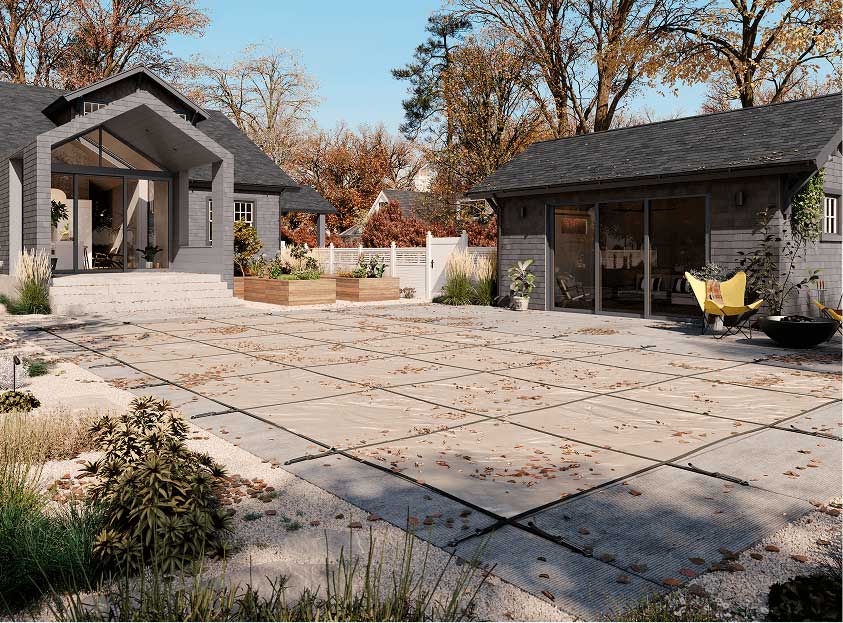
How-to Winterize an Inground Pool
Learn how to close your pool and protect your investment during winter months.
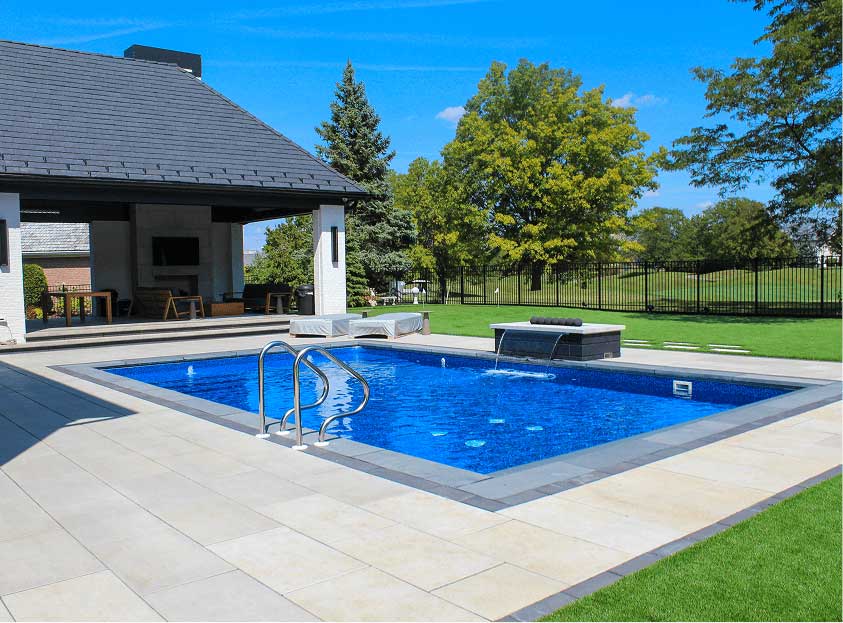
How-to Open an Inground Pool in the Spring
Everything you need to know to about the pool opening process.
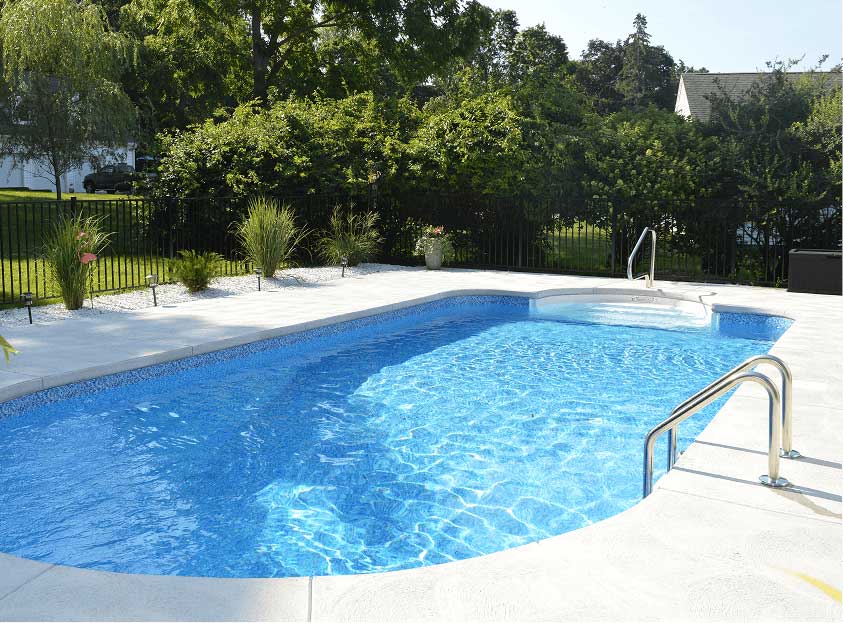
How-to Clean Pool Filters
Tips and step-by-step guides to clean your pool filters.
Common Pool Maintenance Questions & Terminology
The following information shows ranges for basic water chemistry and recommendations for how often they should be tested.
Water pH
- Normal range: 7.2 to 7.8
- Test frequency: 2 to 3 days
Free Chlorine
- Normal range: 1.0 to 2.0
- Test frequency: 2-3 days
Total Alkalinity:
- Normal range: 80 to 120 ppm
- Test frequency: Weekly
Calcium Hardness
- Normal range: 180 to 220 ppm
- Test frequency: Monthly
Stabilizer
- Normal range: 30 to 50 ppm
- Test frequency: Monthly
PH is the measurement of acidity of water – measured on a scale of 0 to 14 with 7 being neutral. Not only do proper pH levels allow the other chemicals to do their work, but it is important to note that low and high levels can cause damage to a vinyl liner.
- Low pH Levels: A pH below 7.0 means the water is very acidic. Under the right circumstances with pH below 7.0, the liner can actually grow and develop unsightly wrinkles.
- High pH Levels: As the pH approaches 8.0, the water becomes very basic (alkaline). High pH greatly accelerates the aging process and shortens the life of the liner. Chlorine is also much less effective at higher pH levels. At a pH of 8.0; chlorine is only 22% effective.
Improper pH levels can lead to the vinyl liber absorbing water, causing it to expand. This can create wrinkles. It’s the same concept as spending too much time in the bathtub and your fingers become pruned and wrinkled!
Alkalinity is a measurement of the alkaline materials dissolved in water. Alkalinity in the ideal range of 100 to 150ppm helps the pH to resist fluctuations. If the alkalinity is low it can cause a “pH bounce” causing the pH level to fluctuate in and out of the acceptable range.
Calcium Hardness refers to the amount of dissolved minerals in water. A low hardness can lead to corrosion of the pool surface, filter, heater, ladder, etc. A calcium hardness level that is too high causes cloudy water and scaling (white chalky appearance).
It is not uncommon to find metals, often called free metals, dissolved in pool water. Usually they come from source water, sometimes they come as a result of the erosion of metal pool fixtures, such as heater cores.
Free metals in pool water can cause staining of pool surfaces and inhibit the performance of water sanitizers. Ideally, there should be no metals in the water: 0 ppm. If metals are detected in your water you will need a sequestering agent to render them harmless.