


How to Open an Inground Pool
Everything you need to know about the pool re-opening process.
How to Open Your Pool
While opening your pool for spring isn’t terribly complicated, there are several steps you need to follow.
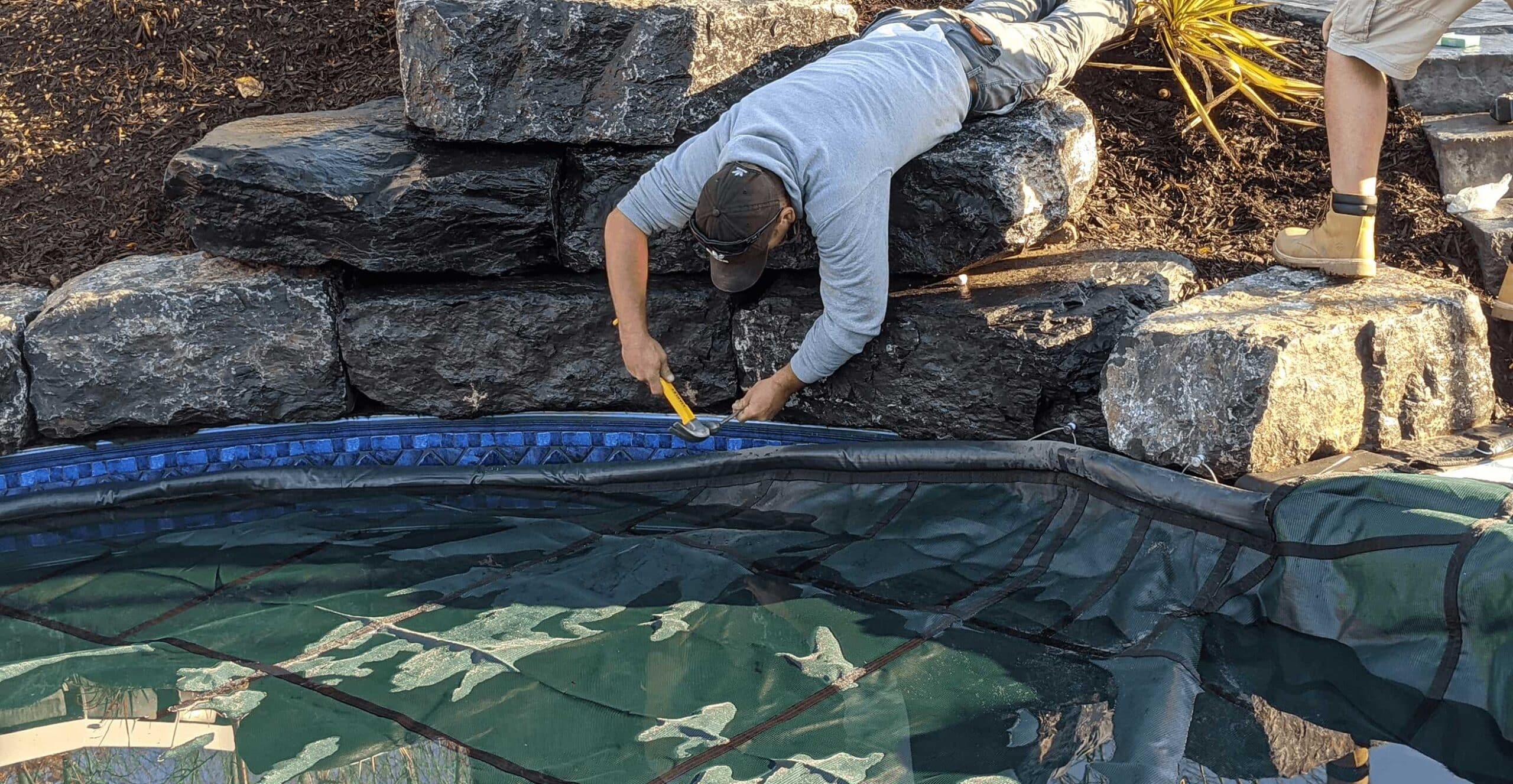
Step One: Clean and Remove Your Cover
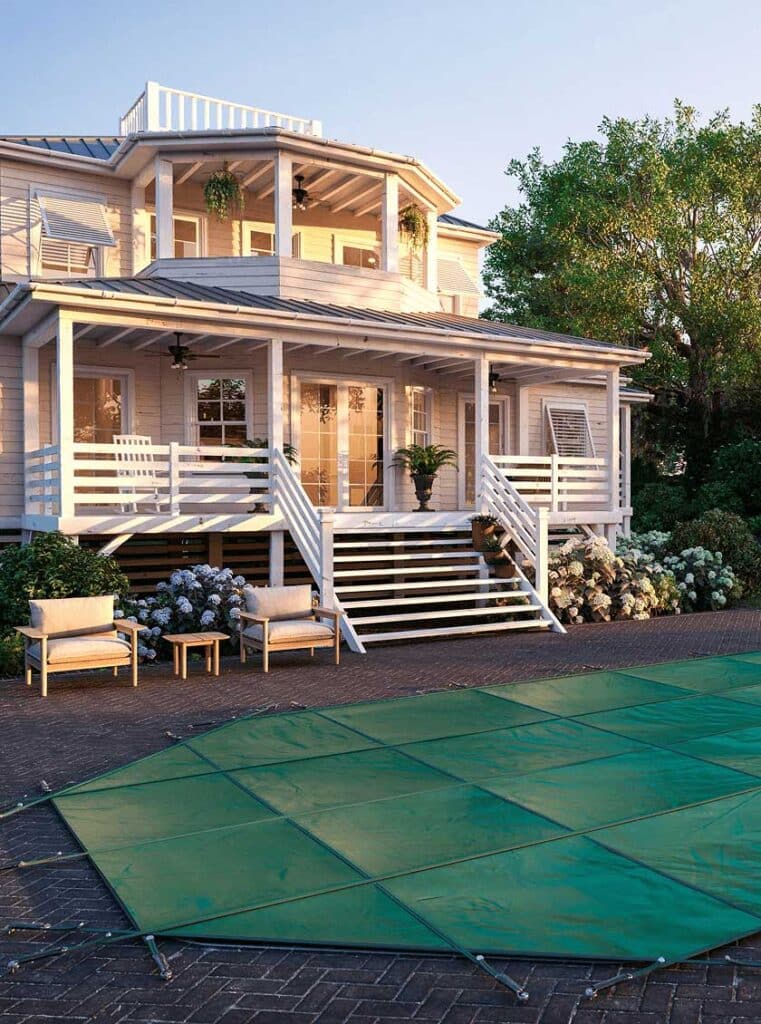
Remove the water and debris off your pool cover manually or with a cover pump. After it’s cleared, take off the pool cover and reinstall your ladders and pool accessories.
Note: When pumping water off of your cover, you must keep a mid-skimmer water level in your pool, under the cover.
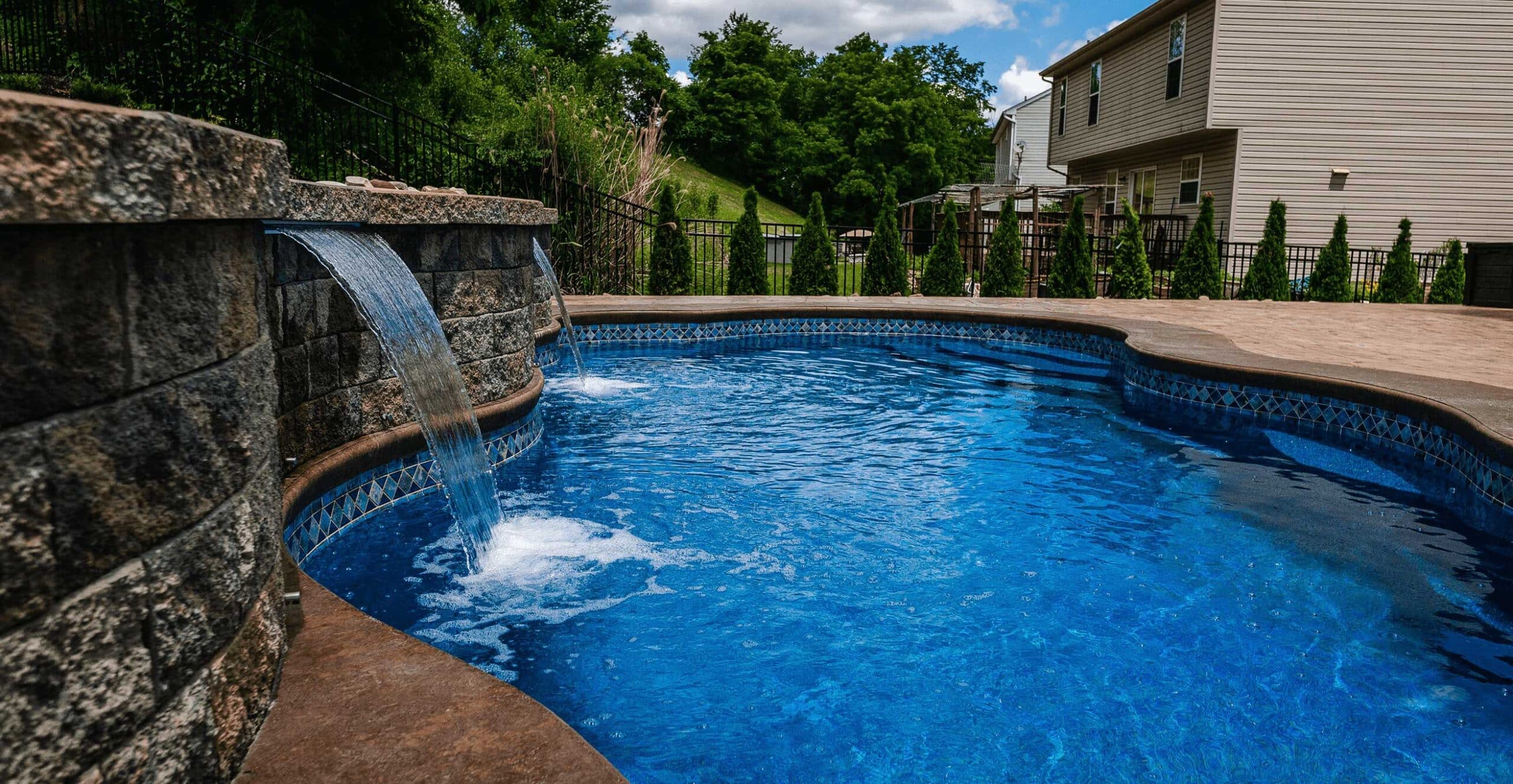
Step Two: Fill Your Pool
Use a garden hose to fill your pool to its regular water level. Look for the skimmer opening or aim to get to it around halfway up the tile.
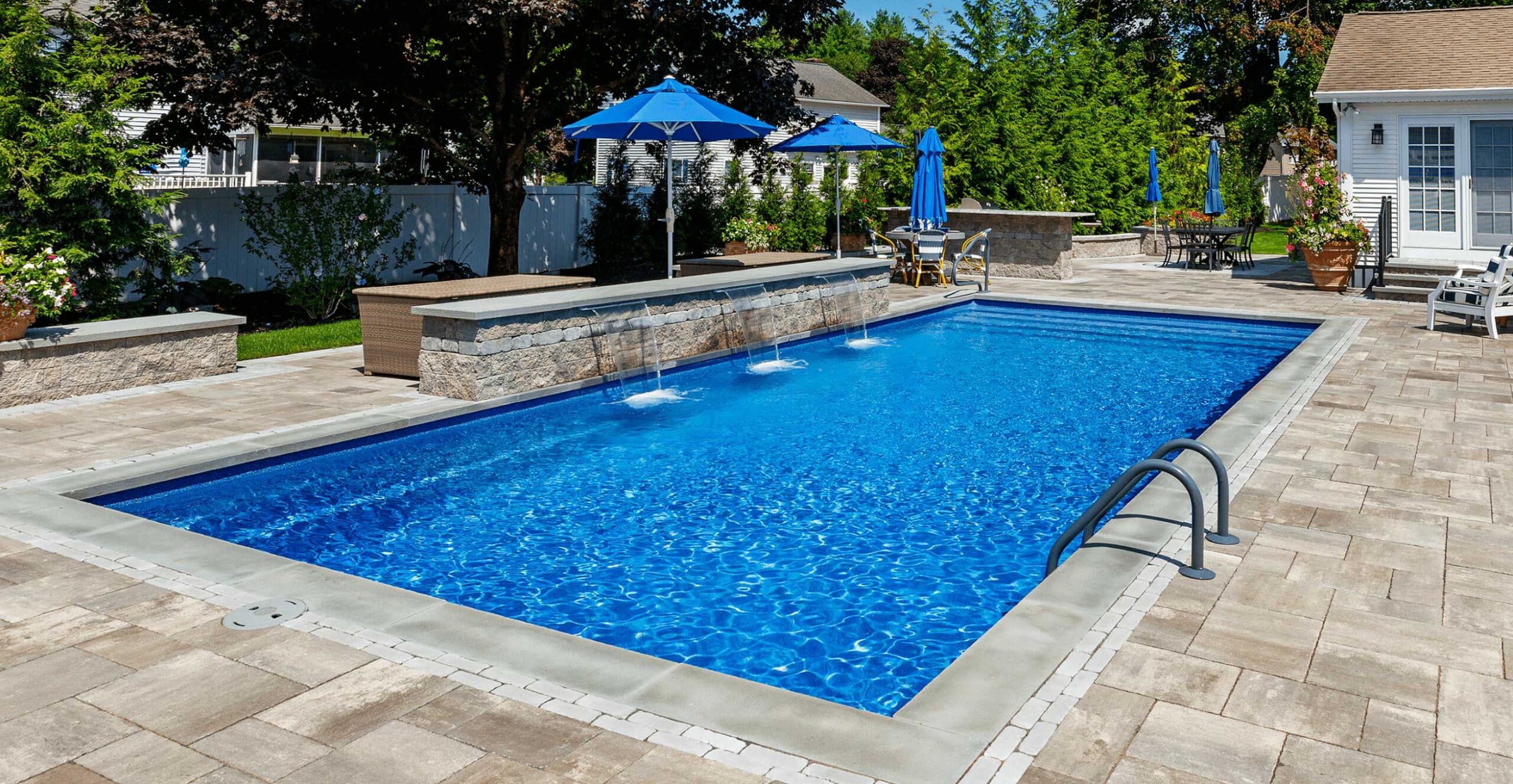
Step Three: Reconnect Your Components & Turn Systems Back On
Reconnect everything you disconnected from your filtration system the previous year, such as the pump, heater, filter, etc.
If you have used antifreeze in your skimmer and return lines, wait until it has dried until you remove the winterizing plugs. Reinstall the regular drain plugs throughout the system. Check and clean your filter if it looks dirty. Set the multiport valve to “Filter.”
Prime the pump and turn the filtration and circulation systems back on. Let the air escape from the air relief valve (if you have one) until water spurts out, then close it. Check all equipment for cracks, strange noises or leaks.
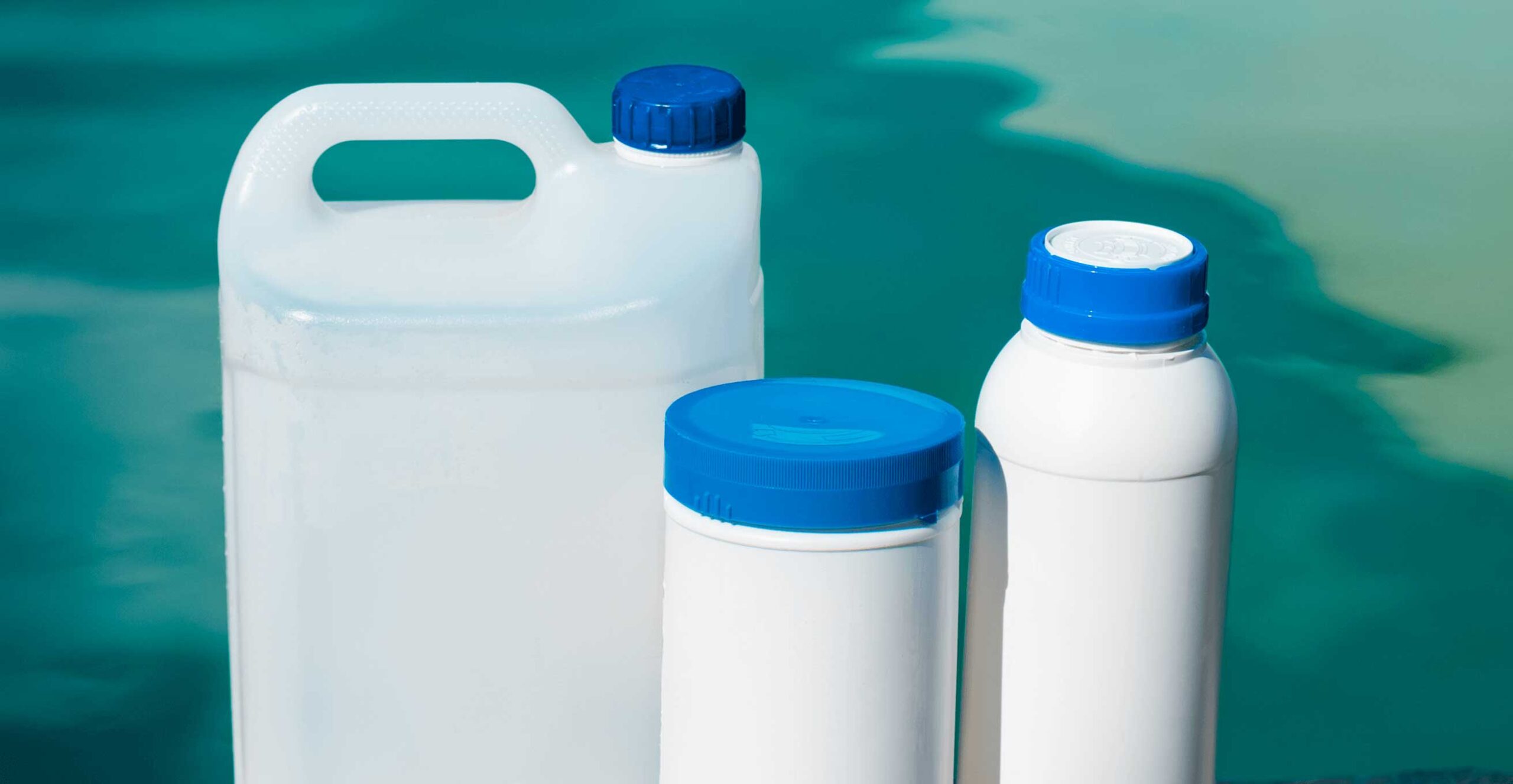
Step Four: Add a Solution
Add a pool solution to prevent staining from metals like copper or iron that may have accumulated in your pool while it was closed, and follow the directions for use.
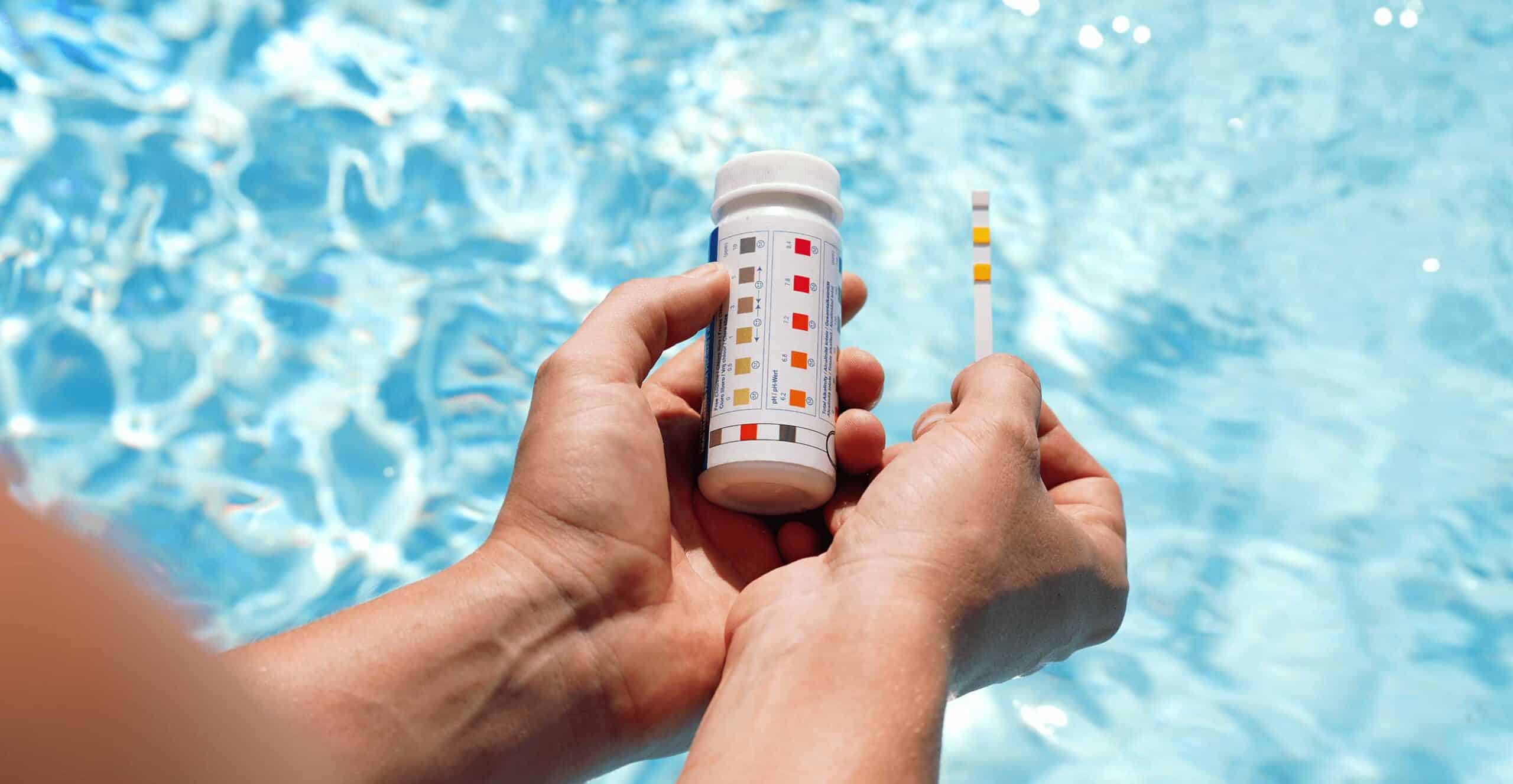
Step Five: Test Your Water pH
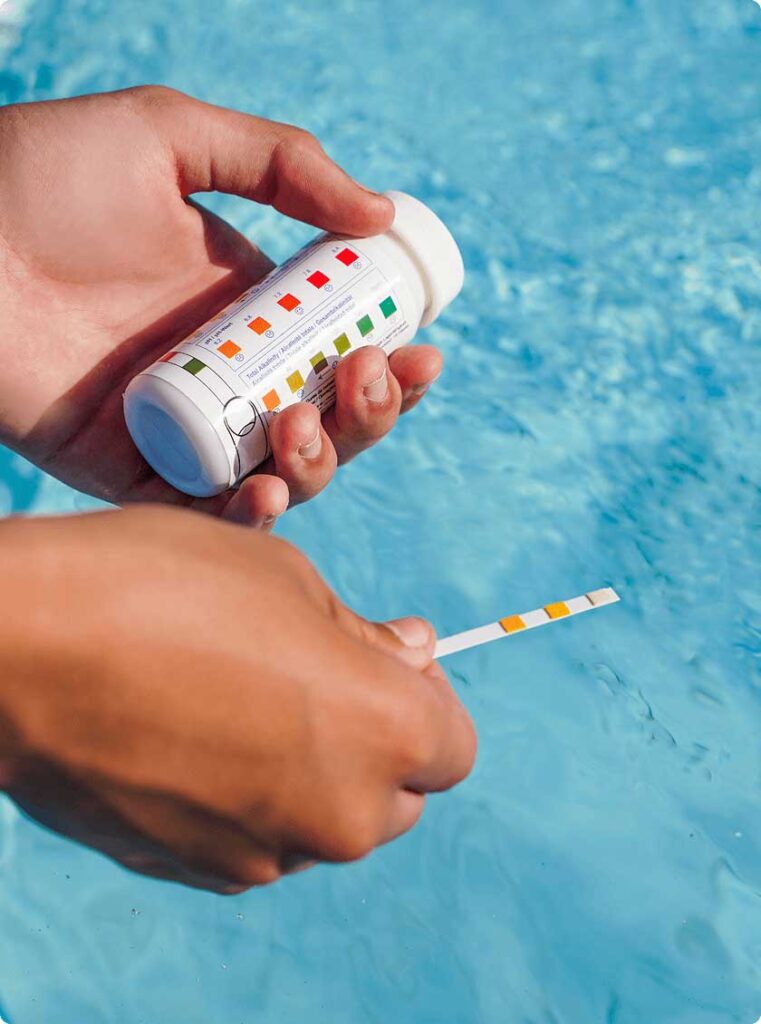
Use a test kit to test the pool’s pH. Ideal levels should be:
- pH: 7.4 – 7.6
- Calcium hardness: 200 – 400 ppm)
- Free available chlorine: 2.0 – 4.0 ppm
- Total alkalinity: 80 – 120 ppm
Balance your water to get it to the appropriate levels, starting with the total alkalinity. If your total alkalinity is too high, add acid; if it’s too low, add a solution to boost it. Test your pH again once you have gotten your total alkalinity under control.

Step Six: Clean Your Pool Thoroughly & Run the Filtration System
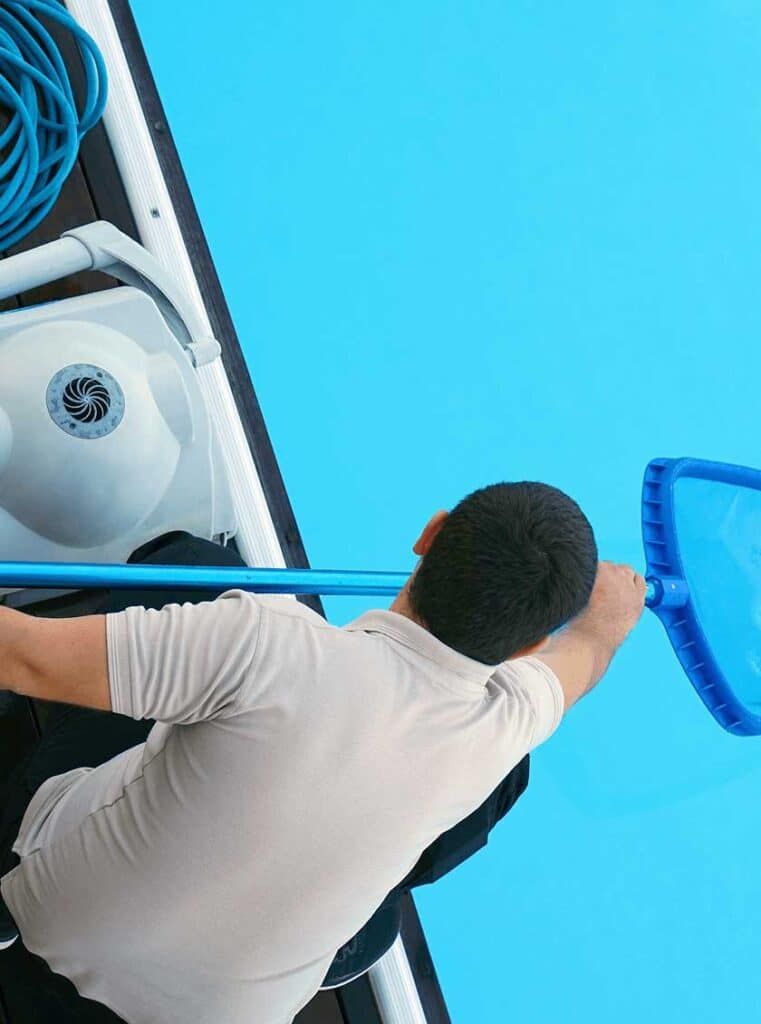
Give the pool a good cleaning using the vacuum and brush, taking special care to remove any dirt or residue that may be hiding on the ladder, steps, lights or other crevices.
Run your filtration system for 10 hours to remove the remaining dirt in the pool.
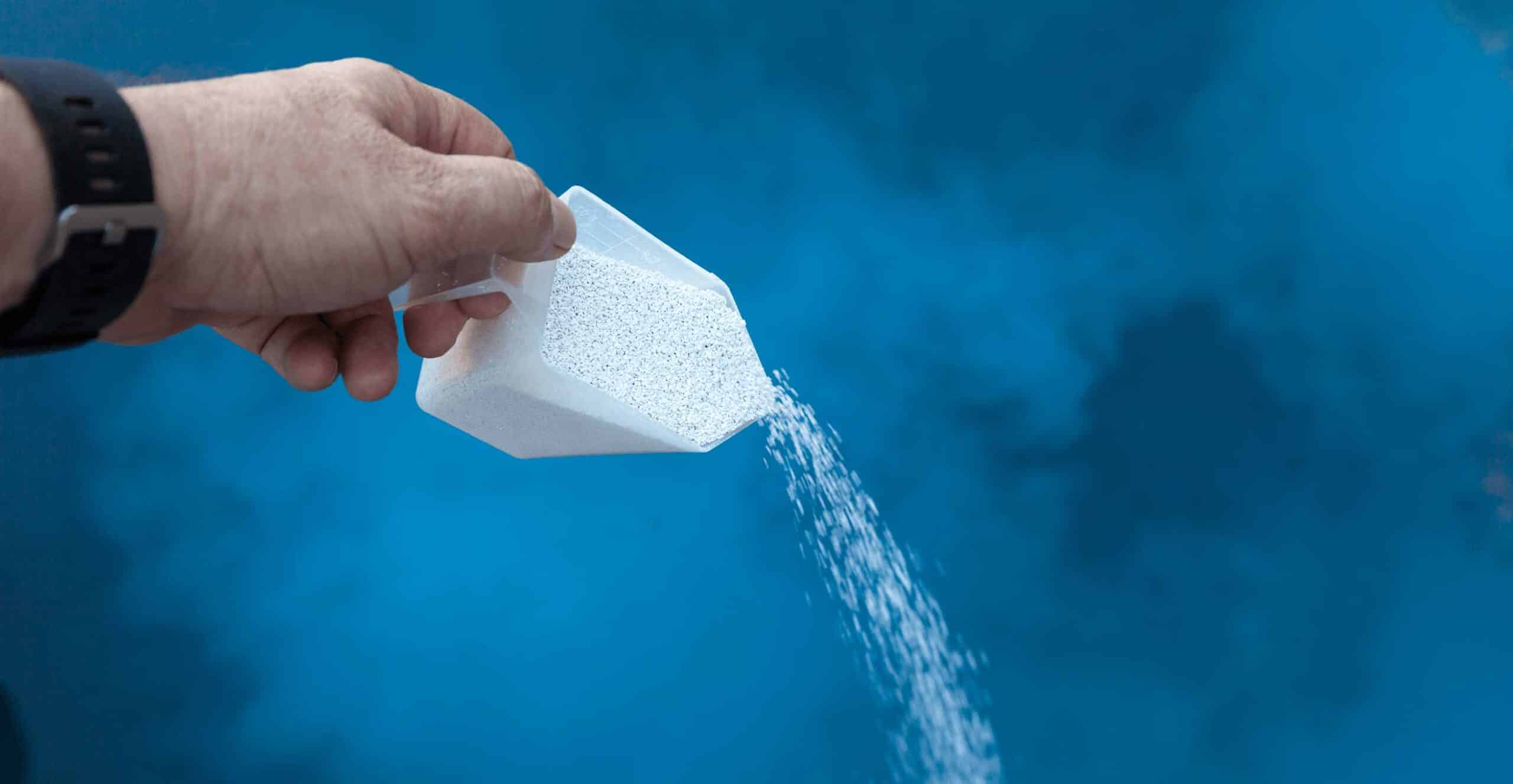
Step Seven: Shock the Pool
Shock the pool using a chlorine-based solution to kill any bacteria.
How to Open a Pool Checklist
Download our free maintenance resource to get expert tips and step-by-step instructions for opening your inground pool in the spring.
Opening Your Pool FAQs
You should open your pool during any month before the water temperature reaches 70 degrees for most of the day. Algae can grow fast at these temperatures, so the sooner you shock your pool, the better.
The process of opening a pool can vary based on several factors. Pools with dirt and debris will require more vacuuming. Some pools may need several rounds of adjustments to balance water chemistry, which means you’ll have to conduct more testing. If your pool water is fairly dirty, it can also slow down the process, as the chemicals will take longer to work.
Your pool filters can also influence the length of the process. Run your filter until you reach the desired level of water clarity. If you’re unsure about the water quality, contact a Latham pool professional for help
Before using any chemicals when opening your pool, be sure to shock your pool first to burn off any organics that have accumulated during the winter. After 24 hours, bring a sample of your water to your local Latham professional.
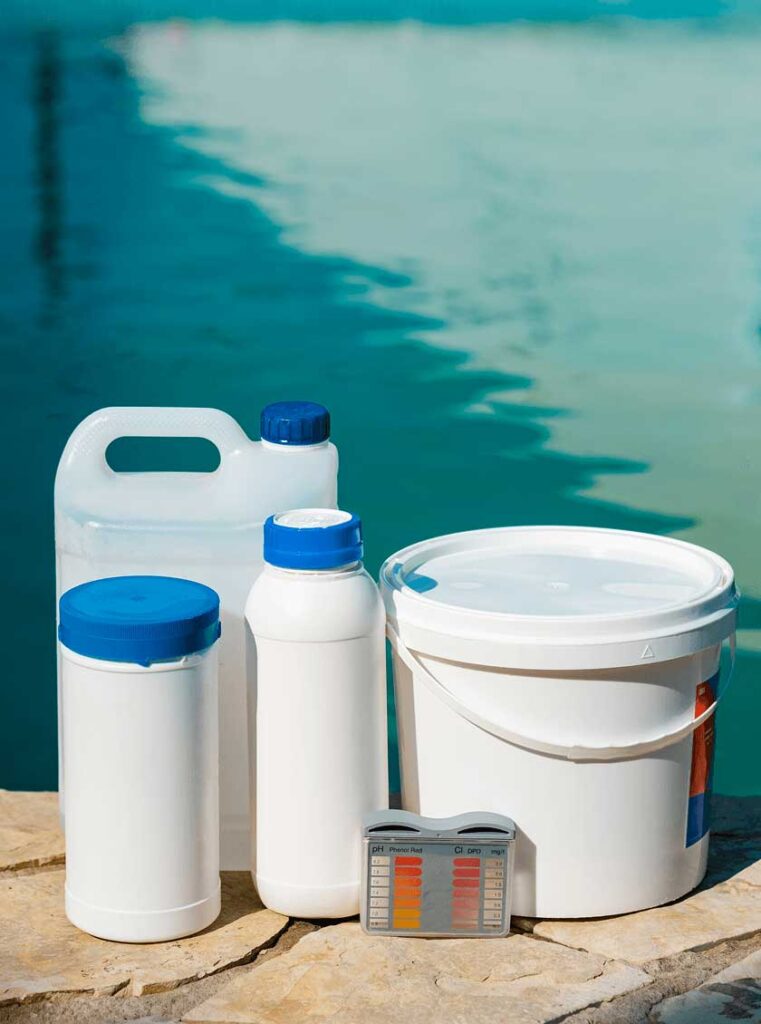
Here’s a list of pool chemicals you’ll need for reopening:
- Algaecide: to get rid of the slimy stuff that turns your pool into a swamp
- Stain treatment: to combat any stains that have appeared over the winter
- pH increaser or decreaser
- Calcium hardness booster
- Alkalinity increaser
- Chlorine: in tablet or granular form to kill bacteria
- Shock treatment
- Test kit: to assess the calcium levels, alkalinity and pH
Learn more about pool chemicals in our water chemistry guide.
The time for your water to appear clear after opening can vary based on your starting point. If you closed your pool properly last season, you should be in pretty good shape. If you can see the bottom of the pool, you may only need to wait about 24 hours for the pool to clear. If you can’t see the first step, you may need to wait a little longer.
Once you’ve completed the reopening process, your pool may be crystal clear within several days. But if your water still looks green – despite following directions – you may need to balance the water. You may also need to check that your filters are functioning properly. A malfunctioning filter can lead to hazy water.
After you’ve shocked your pool, run your pump for 24 hours and then test chemical levels. The best way to do this is to bring a water sample to a pool professional. If everything looks good, set your filter cycle for as long as it would take to filter all the water in the pool. If the water is still cloudy, increase the cycle length.
You’ll need to achieve breakpoint chlorination to effectively shock your pool at the beginning of the season.
Breakpoint chlorination is the point where enough free chlorine is added to break the molecular bonds.
Shocking kills all the microbes and bacteria that have built up during the winter. If you want to be extra thorough, double shock it and use two pounds of shock for every 10,000 gallons of water. Too much shock can bleach your vinyl liner. Shock must be dissolved and added in slowly. If you need help, contact your Latham pool dealer
Learn More About Pool Maintenance