


How to Clean an Inground Pool
Helpful tips to keep your pool and pool steps clean.
Vinyl Liner and Fiberglass Pool Cleaning Checklist
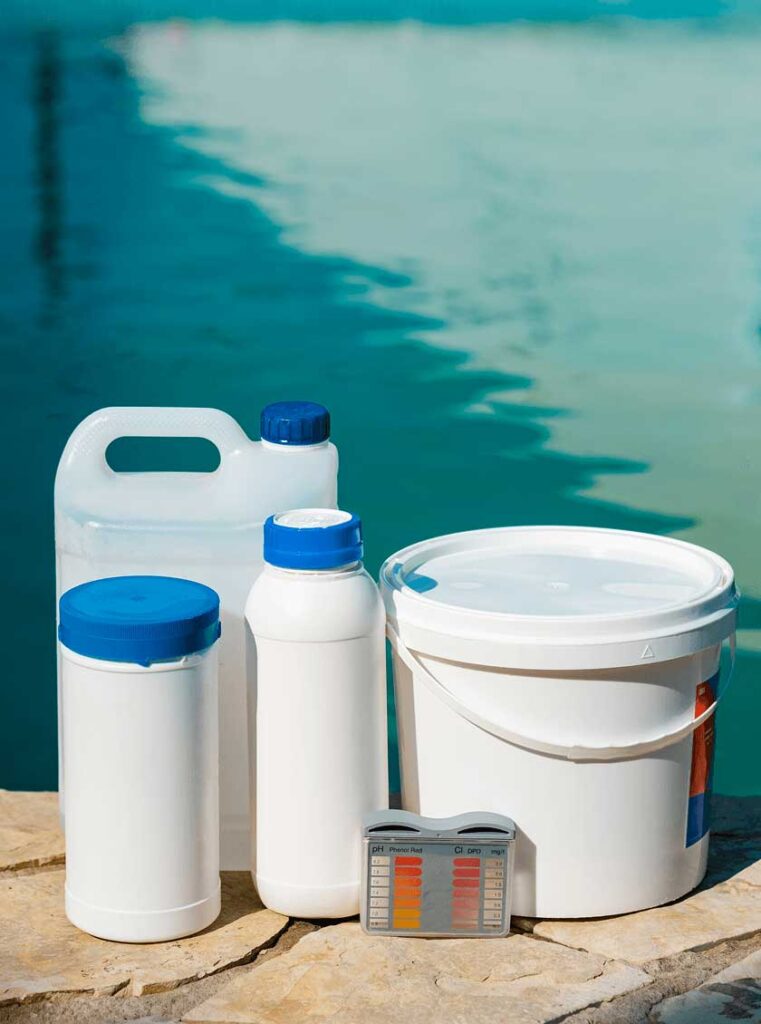
The essential chemicals and tools you’ll need to clean your vinyl liner or fiberglass pool.
A Magic Eraser or other cleaning sponge can come in handy when it’s time to clean your pool steps — not to mention scum lines. You’ll need a bristle brush to gently scrub algae away from the floor, walls and steps of your pool. Whether your swimming pool is vinyl liner or fiberglass, make sure to choose a brush with soft nylon bristles, which will help you avoid accidentally scratching and damaging your pool liner. Always remember to test these tools in a discrete place before using it in highly-visible areas. Learn more about cleaning your pool steps below.
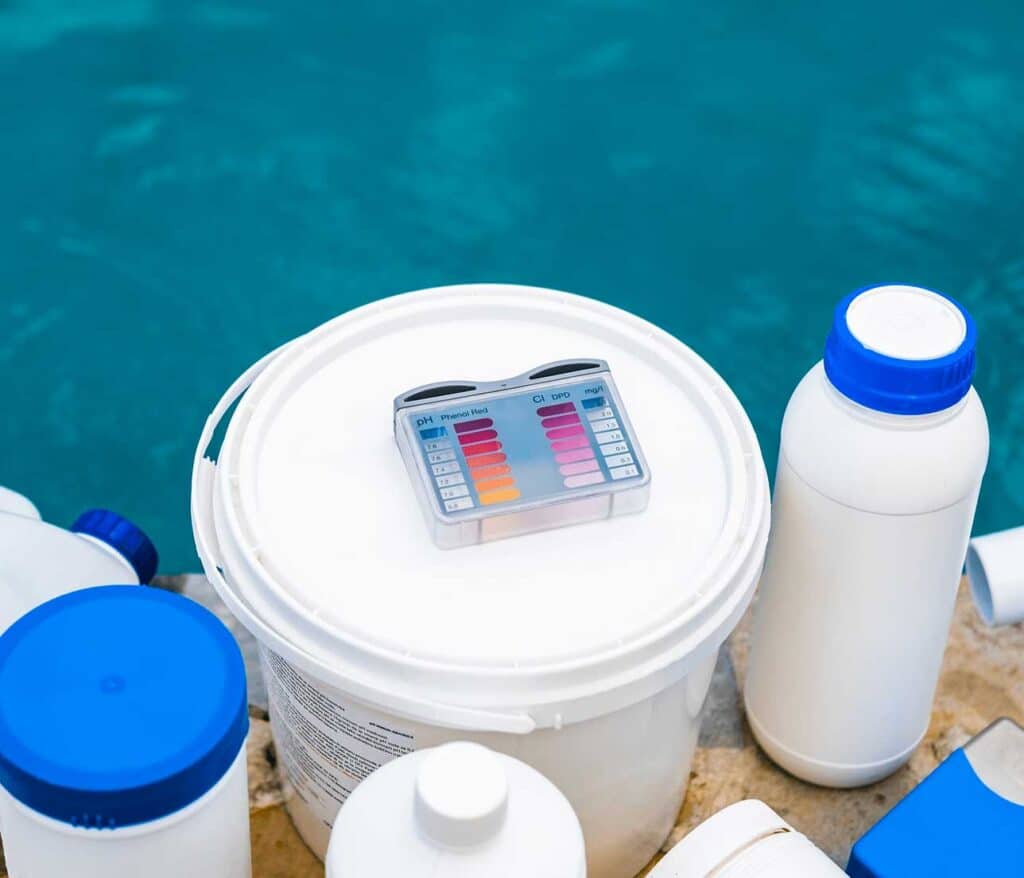
Whether it’s constructed from vinyl or fiberglass, you should chemically treat or “shock” your pool when necessary to destroy chloramines, bacteria and other contaminants. Some common options for pool shock include calcium hypochlorite (cal-hypo), dichloro-s-triazinetrione (di-chlor) and potassium monopersulfate, which provides a chlorine-free alternative to conventional pool shocks. If you need help selecting the right pool shock, contact your local Latham pool dealer. We also put together a helpful guide explaining how to shock your pool.
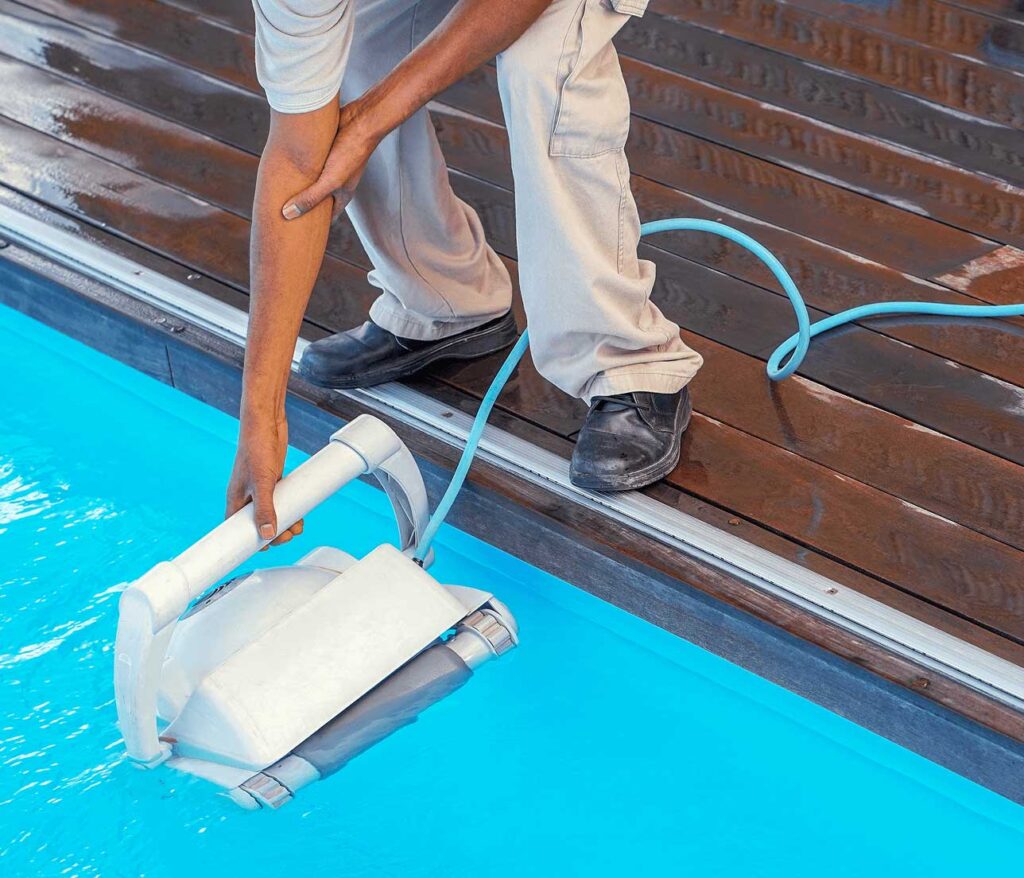
A vacuum is an essential piece of cleaning equipment for any pool, including vinyl and fiberglass models. You can vacuum your swimming pool manually, but a robotic vacuum cleaner allows for easier, hands-free maintenance, so that you can relax while your vacuum does the work. Other types of pool vacuums include suction vacuums, which are an economic option, and pressure vacuums, which work together with pool pumps and booster pumps.
A skimmer net allows you to scoop up and remove debris that has accumulated on the water’s surface, such as floating leaves or dead insects. Pool skimmers are usually available in flat or bag net styles, depending on your preference. While bag nets generally hold more, they can also be trickier to empty out when you’re finished. Don’t confuse the skimmer net with your pool skimmers, which are mounted around the walls of your pool where they collect debris and contaminants. A leaf rake can also help to clear debris from your pool. You can choose either tool depending on the type and amount of debris in your pool.
A telescopic pole is a multipurpose tool that acts like an arm, enabling you to clean otherwise impossible-to-reach areas of your vinyl or fiberglass pool. You can easily attach many types of pool cleaning equipment to your telescopic pole, including pool brushes, skimmer nets, and if vacuuming manually, pool vacuum heads.



How to Clean an Inground Pool
We always recommend contacting an independent Latham pool professional if you’re unsure about the process, but cleaning your pool can be broken down into a few easy steps.
Step One: Remove Floating Debris
Before you start to scrub or add chemicals, the first step is to remove all pool toys, accessories and floating debris – such as leaves, twigs, hair ties or insects. Simply use your telescopic pole and skimmer or leaf rake attachment to scoop up objects that are floating on the surface of the water.
Step Two: Scrub Pool Walls & Steps
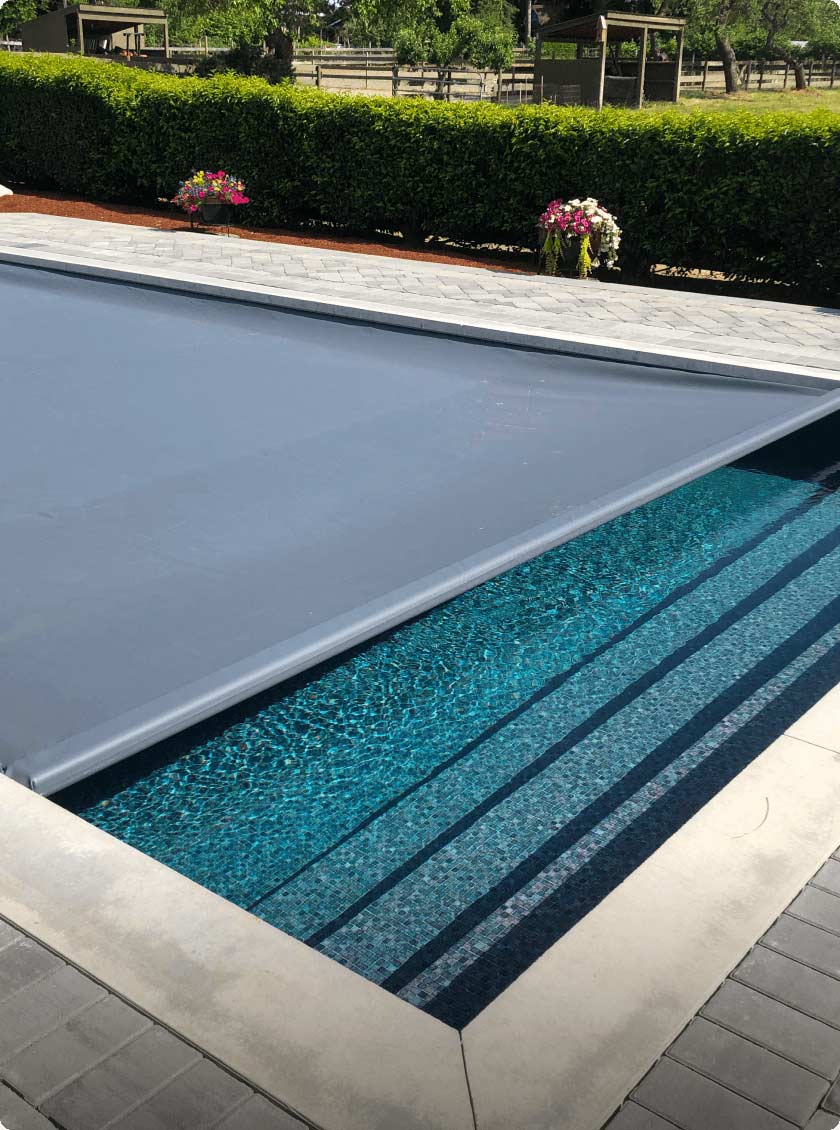
Once you’ve removed all floating debris, it’s time for a deeper clean. Using your telescopic pole and nylon bristle brush attachment, thoroughly buff the walls and floor of your pool, using friction to gently lift away caked-on algae and sediment. For moderately soiled areas, you may need to apply extra force or apply cleaning chemicals.

Step Three: Vacuum Your Pool
Remove debris by vacuuming your swimming pool, following the manufacturer’s instructions for use and assembly. Vacuuming will also help to remove objects that have sunk to the bottom of your pool, such as small pebbles or clumps of dirt.
You can choose between suction vacuums (suction-side cleaners), pressure vacuums (pressure-side cleaners), robotic (automatic) vacuums or manual vacuums. You’ll need to vacuum at least once per week, so consider factors like convenience and cost-efficiency when making your decision.

Step Four: Empty Your Pool Skimmers
Check on your pool skimmers, which are located near the waterline around the perimeter of your pool. Not to be confused with the skimmer net, skimmers are part of your pool’s filtration system, catching debris and other loose objects. This debris can build up, break down and cause clogs unless you periodically empty your pool skimmers.
You should clear out your skimmers at least once per week, but may need to empty them more frequently under certain conditions, such as after a pool party or a heavy thunderstorm.

Step Five: Check Your Filters
Pool filters are separate from pool skimmers and need to be maintained accordingly. While skimmers catch most of the large debris, your cartridge, sand or diatomaceous earth (DE) filters can still become blocked by smaller particles. To keep your pool filters running smoothly — and keep your water at its cleanest — be sure to periodically check them according to the manufacturer’s instructions.

Step Six: Test and Adjust Your Pool Water
Scrubbing, skimming and vacuuming will help to keep your pool looking fresh — but only if you also keep your water balanced with properly adjusted pH, chlorine and chemical levels.
Balancing your pool water requires only a few basic chemicals and pieces of equipment, such as pool test strips, calcium hardness increasers and pH adjusters like sodium carbonate. For a deeper dive into this topic, check out our step-by-step guide to testing and balancing your pool water.
In the event of a chlorine shortage and reduced availability of chlorine tablets used to sanitize your pool, you may want to explore chlorine alternatives to keep your pool water safe, sparkling, and swim-ready.
Step Seven: Shock Your Swimming Pool
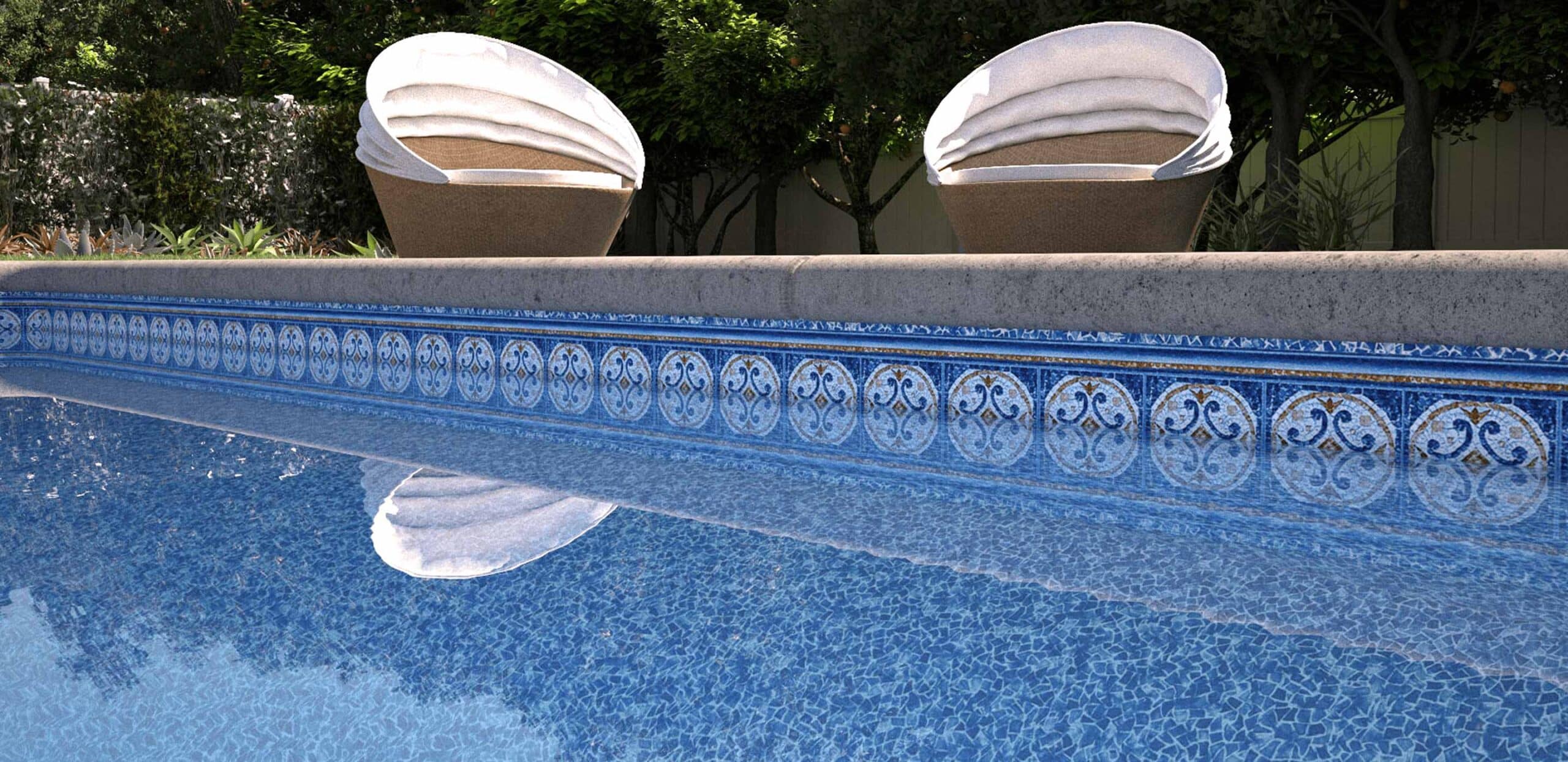
Your pool requires periodic shock treatments. Shocking your pool will temporarily raise the levels of chlorine in the water, destroying algae, bacteria and other contaminants. You can also use non-chlorine pool shock (oxidizer) as an alternative to chlorine shocks like di-chlor, though the results may not be as powerful — especially for tough jobs. Many pool owners actually shock their pool too much, which can cause unnecessary wear and tear. Make sure to contact a professional to help you perform the process correctly.
Run Your Pump on a Daily Basis
Running your pump helps to circulate the water, which discourages algae from growing (consider a flowing stream vs. a stagnant pond). Proper water circulation also helps to ensure that your filters and skimmers function correctly, improving the overall health and appearance of your pool.
The longer you run your pump, the healthier your water will be. While you may spend a little more on electricity to run your pump, you’ll spend less money on chemicals and less time scrubbing.
Pool Cleaning Checklist
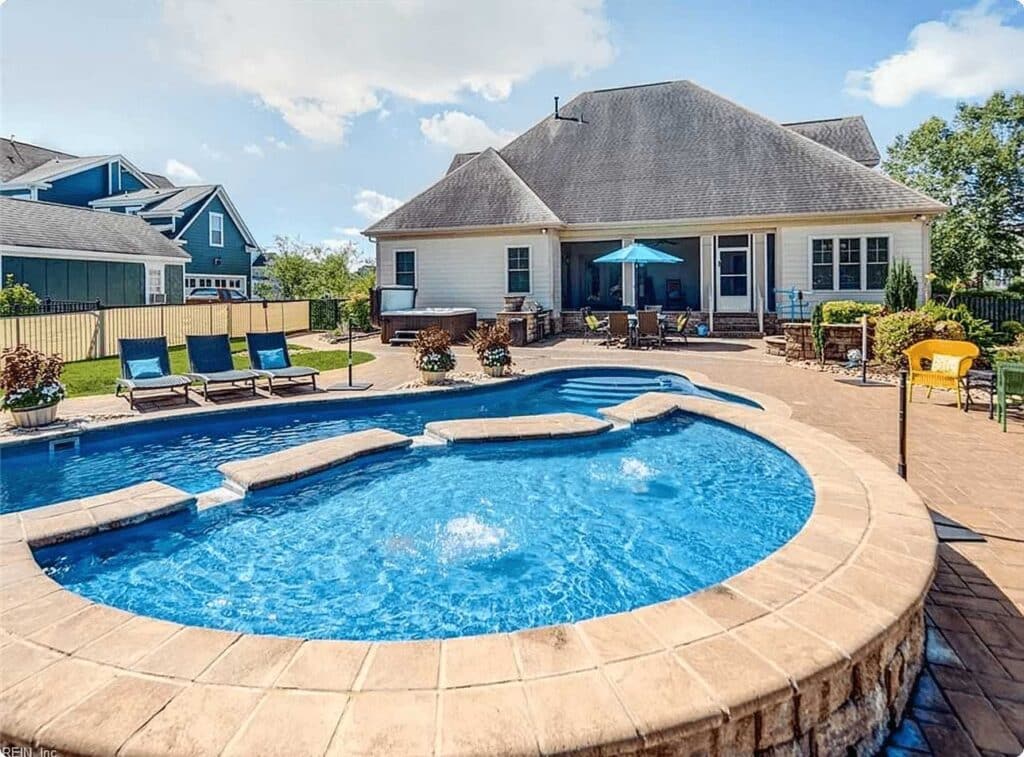
Download our free maintenance checklist to get a step-by-step breakdown for cleaning your inground swimming pool.
How to Clean Pool Steps
Before you apply any cleaning products, you’ll need to determine whether your swimming pool steps are made from molded acrylic fiberglass or if you have vinyl-over steps.

The Best Way to Clean Acrylic Fiberglass Pool Steps
- Use a Magic Eraser above the waterline: Most fiberglass pool stairs can be cleaned using a sponge that contains non-phosphate detergent, such as the Magic Eraser. Look for a product with a soft, non-abrasive texture that won’t scratch or damage your pool.
- Clean below the waterline: There are two methods you can choose for cleaning the underwater portion of your pool stairs. We recommend cleaning your pool stairs while they’re partially submerged, we do not recommend draining your pool as this could damage your liner.
Method 1—Raise Chlorine Levels: Raise the chlorine levels by shocking your pool as described above, and be sure to maintain an elevated chlorine level for 24 to 48 hours.
Method 2—Gently Buff: You can simply use a rag, cloth or sock with a cleaning agent or mild acid to gently buff the submerged portion of your steps. For instance, some pool owners use ascorbic acid, also known as Vitamin C!
The Best Way to Clean Vinyl-Over Steel or Polymer Steps
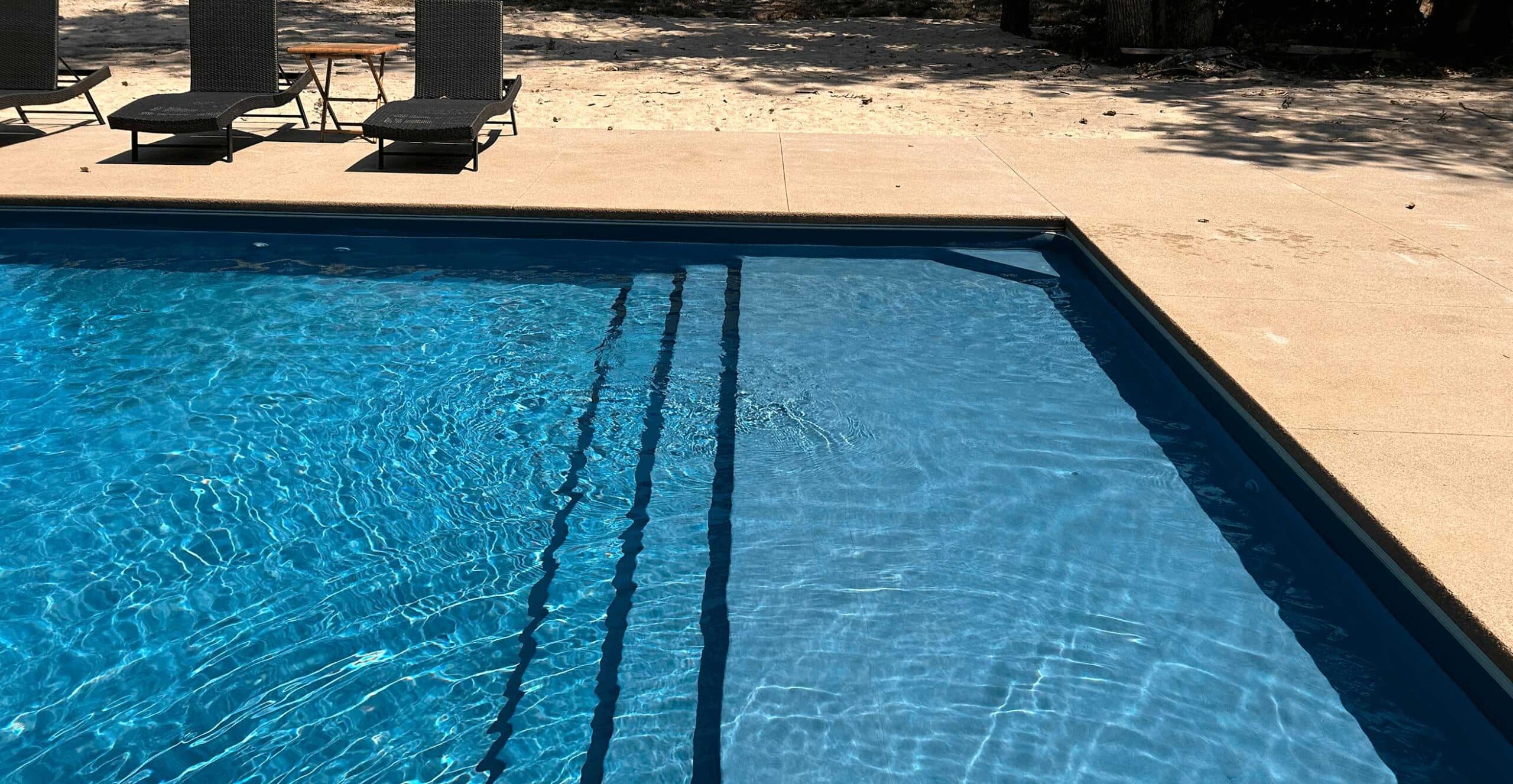
- Consult your pool dealer: Before you buy any supplies to clean your vinyl pool steps, contact your independent Latham pool dealer to ensure you’re not using anything that could damage the surface. It’s crucial to remember that the print on your vinyl liner was made using ink, which many cleaning products can damage or remove. For example, you should never use petroleum-based cleaning products (like Goof-Off or Goo Gone) on vinyl steps or pool liners, because they will remove the print almost instantly.
- Gather vinyl-safe cleaning supplies: You’ll need a few soft, clean sponges or cloths, plus a mild detergent or cleaning agent that’s safe to use on vinyl. You can find these products online or at your local pool supply store.
- Use a sponge or cloth for cleaning: Use your soft sponge and vinyl-safe detergent to gently scrub the pool stairs. Use slow, circular motions to achieve the best results. Since you’re likely to miss a spot the first time, it’s a good idea to repeat the process twice, if possible. Like fiberglass stairs, vinyl stairs can be safely scrubbed using a Magic Eraser.
- Raise your pool’s chlorine levels: If the washcloth and detergent method just isn’t cutting it, you can try shocking your pool in order to raise the chlorine levels for several days. The increased chlorine levels can make it easier to remove various types of deposits from your vinyl liner pool and steps for a better final result. For more help, check out our vinyl pool maintenance checklist.
Pool Steps Cleaning Checklist
Download our free step-by-step checklist for cleaning different types of inground steps, including acrylic fiberglass steps, vinyl-over steel and vinyl-over polymer steps.
Pool Cleaning FAQs
There are a variety of factors that impact your total pool cleaning time, including the size of your pool; how heavy the staining or contamination is and whether the water needs to be balanced or shocked. One of the best things about vinyl and fiberglass pools is that if you’re keeping them clean on a regular basis (running your pool pump and having your pool dealer check on things), they require less maintenance than other pool types. Make it a part of your weekly pool season routine to tend to pool maintenance. The more frequently you test, balance and clean your pool, the less work you’ll have to do each time. This means less time scrubbing steps and more time swimming or lounging poolside.
For truly effortless cleaning, you can also consider hiring a professional. In fact, there are certain situations where we actually recommend it, such as opening your pool for spring.
The more often you clean your pool, the less opportunity there will be for staining and contamination. That means more time enjoying your pool, and less time maintaining it.
For best results, we recommend following our step-by-step cleaning routine once per week. Just remember that you don’t need to shock your pool on a weekly basis. Additionally, there may be times when you need to clean your pool more frequently, such as after a windstorm or inclement weather.
Also, remember to balance your pool’s chemistry regularly. A pool may look clean but it may not be safe to swim if the water isn’t balanced properly. Most dealerships can provide or recommend professional pool cleaning services. Contact us to learn more about the services in your area.
You step out onto your lawn, ready for a refreshing dip in your pool — only to find that the once-turquoise water is nearly as green as your grass! Shocking your pool or adding algaecides can help you restore water quality.
Typically caused by the growth of algae, green water is common in hotter climates, where these fast-growing organisms can thrive.
Fortunately, there are easy steps you can take to fix it at home. For DIY solutions to murky or green pool water, check out our step-by-step guide on how to get rid of pool algae.
Reopening your pool takes more effort than regular maintenance once it’s open. Once you remove your cover and reconnect your filtration systems, you’ll need to add a pool solution to prevent staining due to metals that may have occurred while your pool was closed. You’ll also need to test your water’s pH and balance it to the appropriate levels – starting with total alkalinity. Then, give your pool a thorough cleaning, using a vacuum and brush. Run your filtration system for a minimum of 10 hours to allow water to circulate and remove any remaining dirt from your pool. Lastly, you’ll want to shock your pool to kill any lingering bacteria.
With this type of heavy-duty project on your hands, it’s usually a good idea to call in expert help.
Most pool dealerships will be happy to provide you with trustworthy recommendations, or even provide you with their own pool cleaning services. Either way, you get peace of mind knowing your pool is in the hands of an experienced professional.
Failing to test (and balance) your pool water regularly can lead to a host of problems, making it more difficult to maintain proper water chemistry. Some common water balancing issues include:
- Excessive chlorination, which can lead to skin rashes
- High pH or alkaline levels that contribute to cloudy water
- “pH bounce” or fluctuating pH levels due to low alkalinity
- Low calcium hardness can corrode your valuable pool equipment and accessories
Regularly testing and adjusting your water can help you avoid these common water balancing issues.
Learn More About Pool Maintenance